
By MTBSA contributor
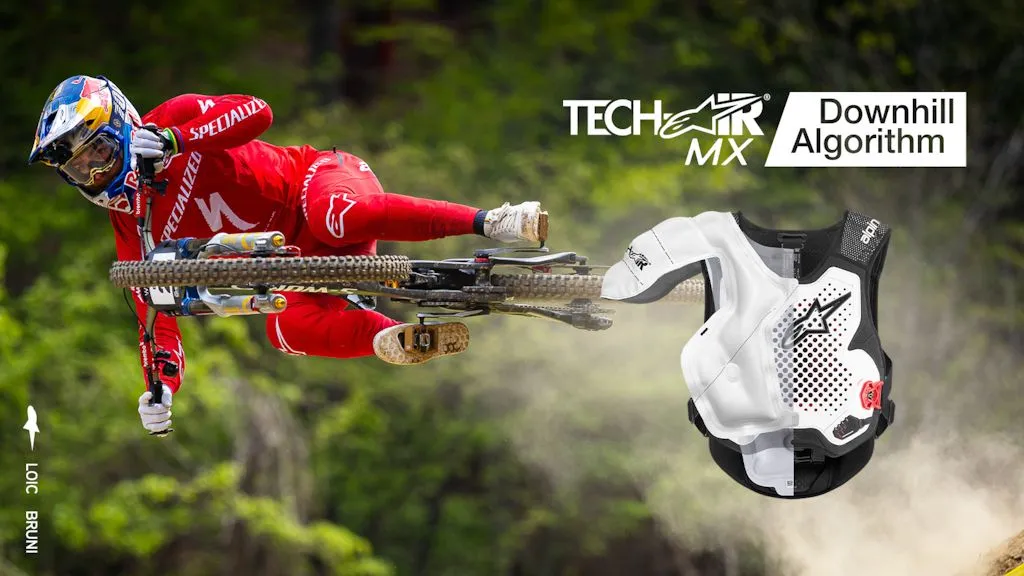
Alpinestars has developed a downhill-specific algorithm for its Tech-Air MX airbag system. The aim is to recognise a loss of control and inflate protection around the rider’s chest, back and shoulders while distinguishing a crash from normal riding movements.
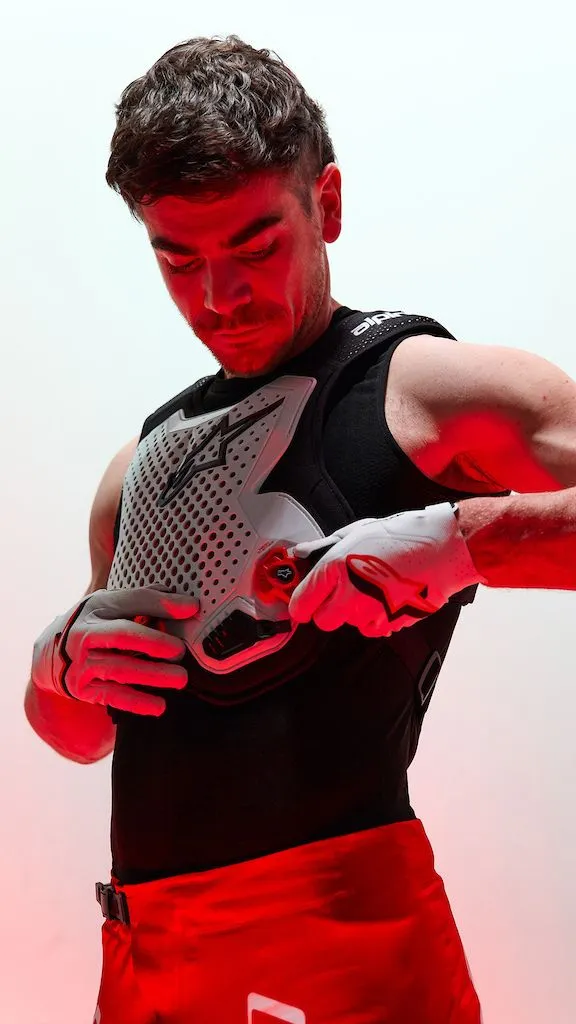
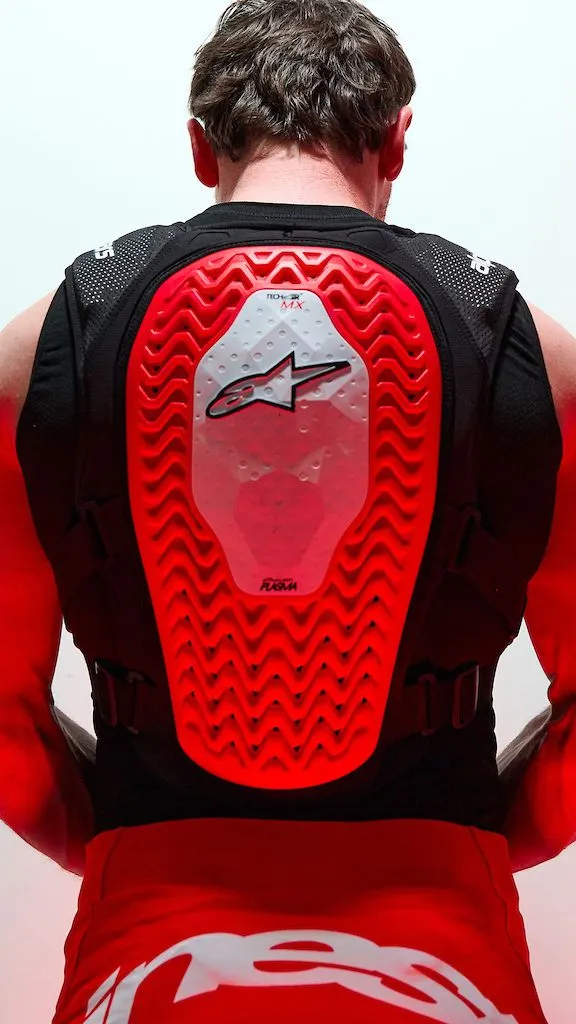
An airbag inside conventional protection
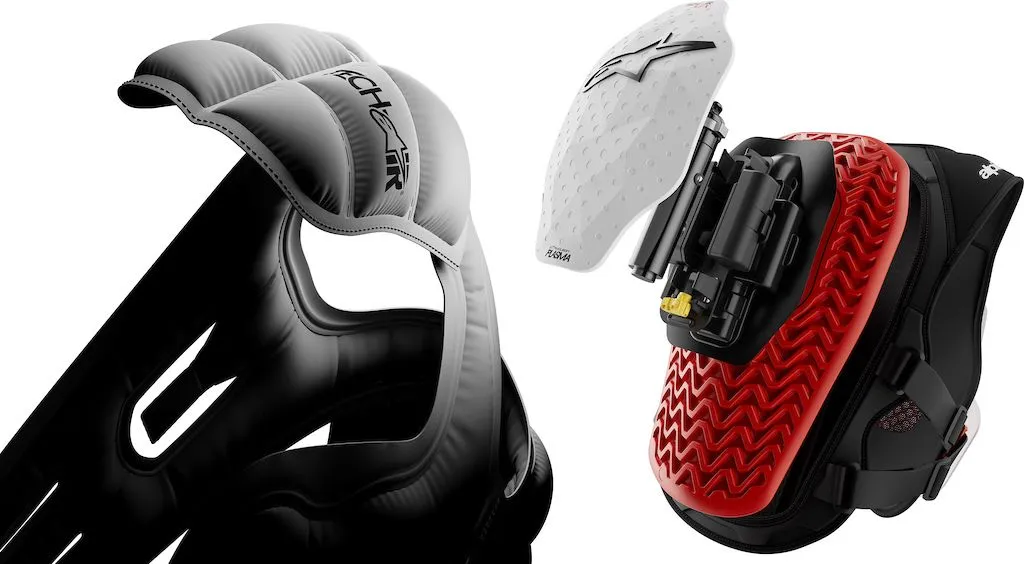
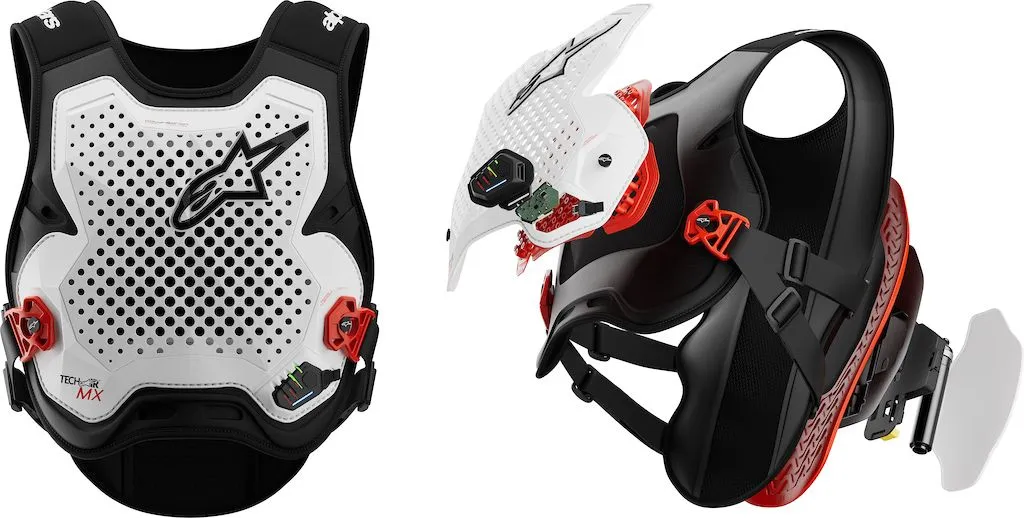
The system combines passive Level 1 chest and back protectors with an electronically triggered airbag. Its six sensors measure acceleration and rotation, with the electronics contained in the protector; no bike-mounted sensors or GPS are required.
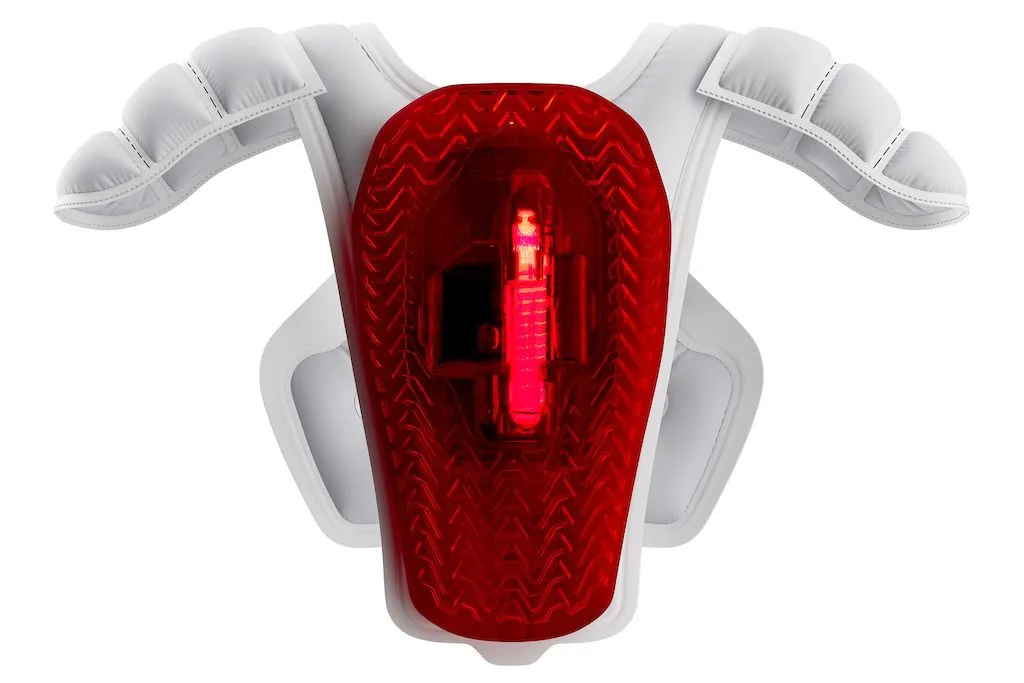
Alpinestars lists a claimed weight of 1.6 kg in medium, battery life of up to 30 hours and sizes S to XL. The specification gives an average inflation time of about 40 milliseconds. The airbag is listed as CE-certified Category II under EN 1621-4:2013.
The company reports an 82% reduction in transmitted impact energy against traditional chest protectors. That is a manufacturer claim, not an MTBSA result or a guarantee that injury will be prevented.
The downhill algorithm matters
Development began in 2022, with the supplied launch report describing more than 200 hours of data from 17 riders. Racing use included teams such as Specialized Factory Racing and riders including Amaury Pierron, Loïc Bruni and Jordan Williams.
Compatibility is a crucial detail. The announcement says Tech-Air MX units purchased before 1 September 2026 cannot use the downhill algorithm. Buyers are instructed to confirm the correct unit for their intended discipline with the dealer; owning an older motocross system does not automatically provide downhill compatibility.
Deployment, servicing and price
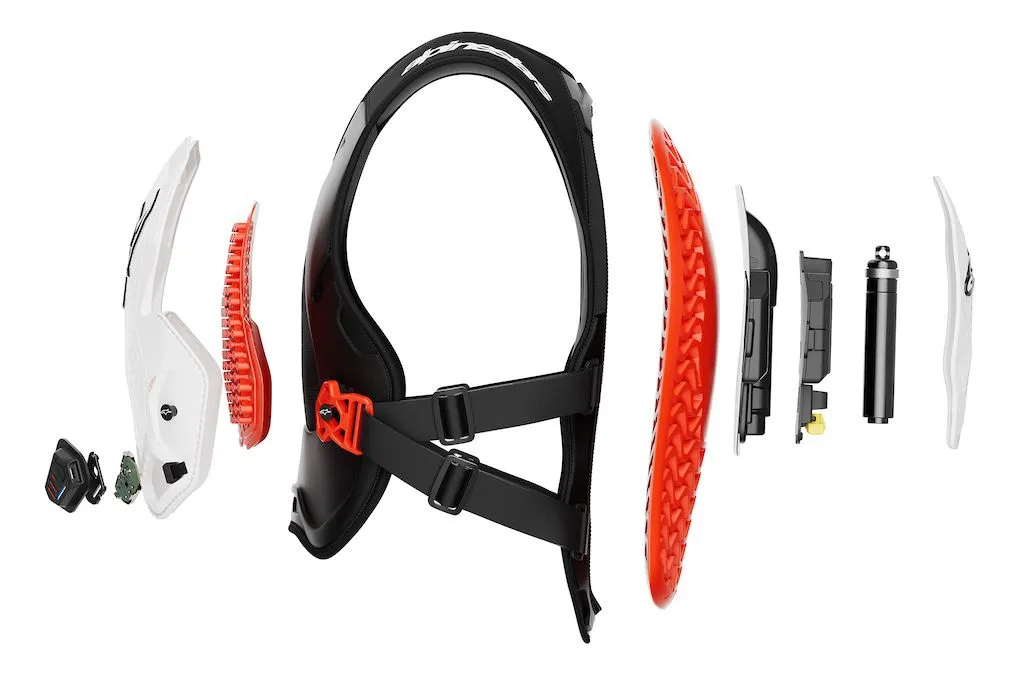
The stated system price is ≈ R11 286, with replacement canisters at ≈ R1 880. A canister is single-use. The system is certified for six deployments before servicing is required, according to the launch specification. Follow the manufacturer’s inspection and service instructions after any incident.
For South African riders, confirm algorithm access, fit, replacement canister supply and authorised servicing before purchase. The supplied article does not confirm local stock or rand pricing. This is an explanation of the announced system, not a safety certification or a hands-on MTBSA test.
More images from this article
About these rand prices
Amounts marked ≈ are approximate rand conversions of overseas prices, using SARS reference rates dated 12 October 2026, rounded to the nearest rand. They are not South African retail quotes and exclude additional shipping, import charges and local retailer costs. Confirm current local pricing with a South African dealer. Unqualified dollar prices in US-market reporting are treated as US dollars; explicitly identified currencies use their corresponding rate.
What's your take?
Share your experience. All comments are reviewed before appearing.
Sign in to join the conversation