
By MTBSA contributor
Bar compliance is all the rage these days. Some companies, such as OneUp Components, claim their bar has "industry-leading" compliance, while others like Fasst Company state theirs "isolates your upper body from abuse and vibration.”
But do bars like these live up to their marketing claims? Which bar gets the compliance just right? And at what point does too much compliance begin to feel like you are steering with a wet pool noodle?
To start answering these questions, we put nine different handlebars to the test in both the lab and out on the trail with the ultimate aim of finding the most comfortable riding handlebar.
What is Compliance?
Before we can begin, we must first define compliance: the measure of how much a material deforms under a given load. In the context of handlebars, a more compliant bar will flex more than a stiffer one when subjected to the same load. The amount of flex is determined by a combination of the bar's shape (such as width, tube diameter, and geometry) and its material layup (including material type and thickness)
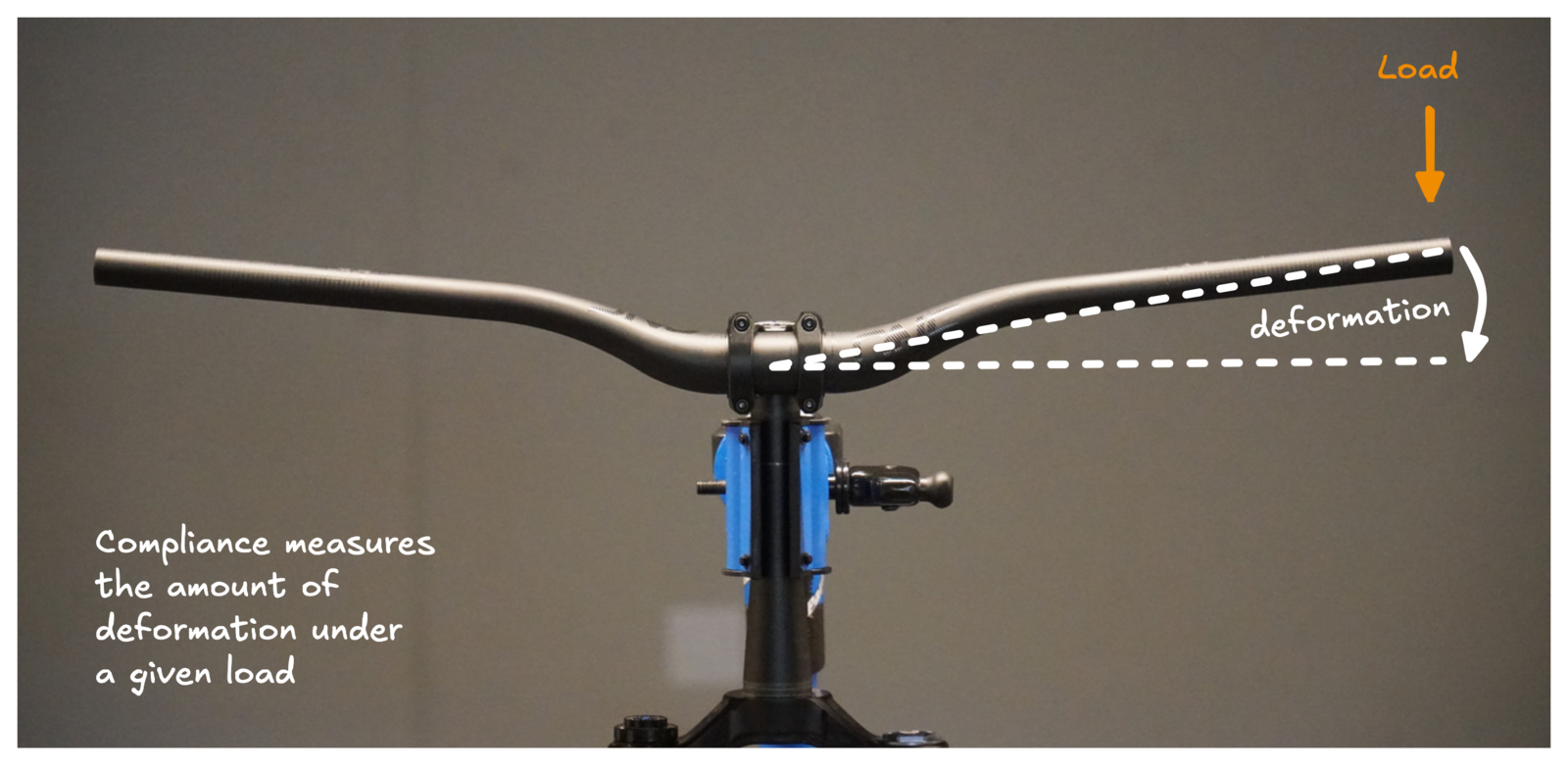
In theory, a more compliant handlebar is more comfortable on the trail because it dissipates impacts over a longer period, reducing the peak forces felt by the rider. On the flip side, that same compliance can result in vaguer, less precise steering. With a perfectly stiff bar, every input from the rider translates directly to the front wheel. Introduce compliance, however, and that precise one-to-one relationship gets distorted by the flex.
To try and find the balance between comfort and steering precision, most companies develop a custom tune for their bar, such as RaceFace's affectionately named Goldilocks tune, which balances "stiffness for control without harshness" or Enve's "downhill-focused flex profile.”
Companies often also make the distinction between vertical and horizontal (i.e., along the steering axis) compliance with the aim to increase vertical compliance for comfort and minimize horizontal compliance for steering precision.
For example, Fasst state their bars "are precise in the steering path yet forgiving in the load path,” whereas OneUp, when comparing their V2 bar to others on the market, state that "the results were a 21% increase in vertical compliance (comfort) and a 28% increase in steering stiffness (responsiveness).”
While the forces acting on a bar during riding vary, the demands for vertical compliance and horizontal stiffness derive from the relationship between a typical rider's body position and a bike's head angle. Here, we can assume more steering forces occur in the horizontal plane, while more compressive forces occur in the vertical plane. However, as discussed later, the relationship is probably more complex than this.
Bars Tested
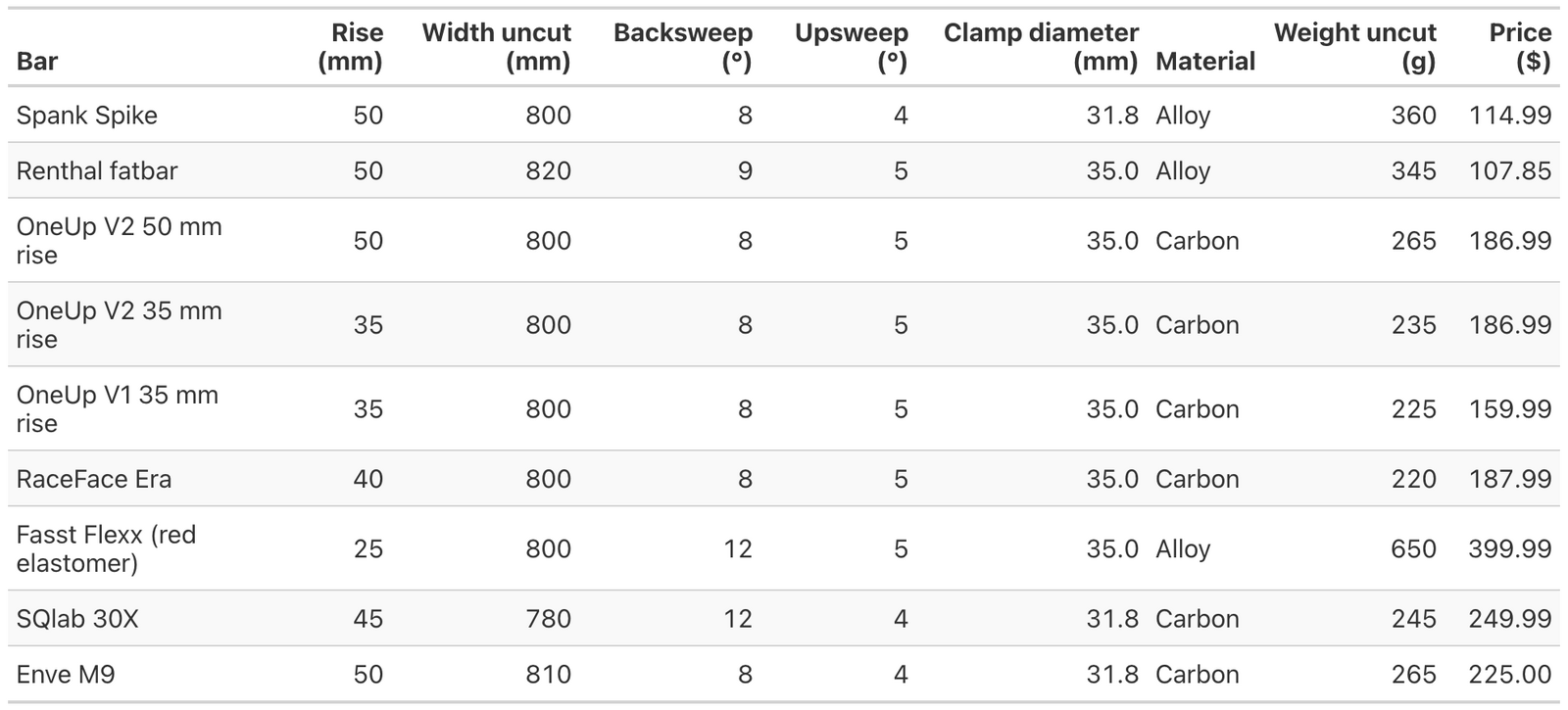
Eight bars, each highlighting compliance or flex somewhere in their product copy, were sent for testing. A ninth bar, a Renthal Fatbar35, despite no mention of compliance, was also included as a reference bar. It’s what I’ve spent a good chunk of time on and is popular among racers and enthusiasts alike. Every manufacturer was instructed to send bars that closely matched my preference of 50mm rise, 780mm width, 9-12° backsweep, and 5° upsweep. A 42mm length OneUp stem was paired to the bars, and SQlab alloy shims were used to house 31.8 mm diameter bars into the 35mm stem bore.
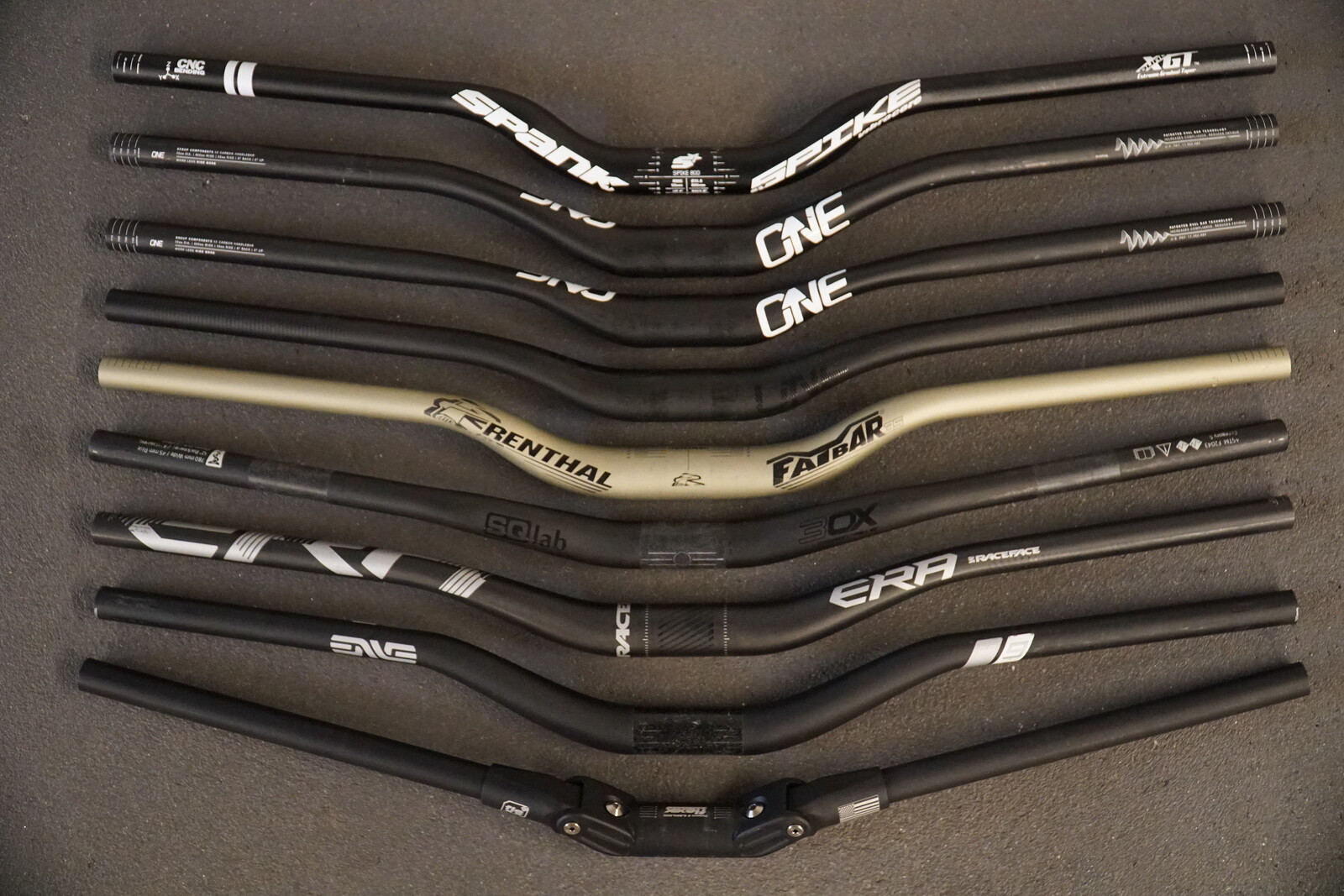
Given the variations in bars produced by each manufacturer, not all bars were available in my preferred spec. Notably, the Fasst bars were only available in 25 mm rise, and OneUp also sent two 35 mm rise variations of their V1 and V2 bars for inclusion in testing. Additionally, only the SQlab and Fasst bars were available in the preferred 12° backsweep variant. While variations in bar geometry are another variable to factor into the testing, achieving perfect symmetry across all manufacturers wouldn't have been possible in any case. But, as you will soon discover, I don't think this played a role in the outcome.
Another interesting difference among the bars is that the Fasst bars were the only bars on test with a tunable spring rate, which can be changed by swapping out elastomers sandwiched around a pivot near the stem clamping area. To suit different rider weights and riding styles, four different elastomer tunes are provided with each bar: soft (blue), medium (yellow), hard (red), and extra hard (black).
Lab Testing
To quantify compliance, each bar was clamped in a rigid test rig, and 19.75 kg (43.54 lb (19.7 kg)) was hung from one end. The deflection from its static (unsprung) position was then recorded using a high-precision dial indicator with an accuracy of 0.01 mm. Given the deflection of each bar was linear, the chosen load didn't matter as long as it was consistent between the different bars, so a load of 19.75 kg was selected as it maxed out the dial indicator's 25mm measurement range for the most compliant bar on test.
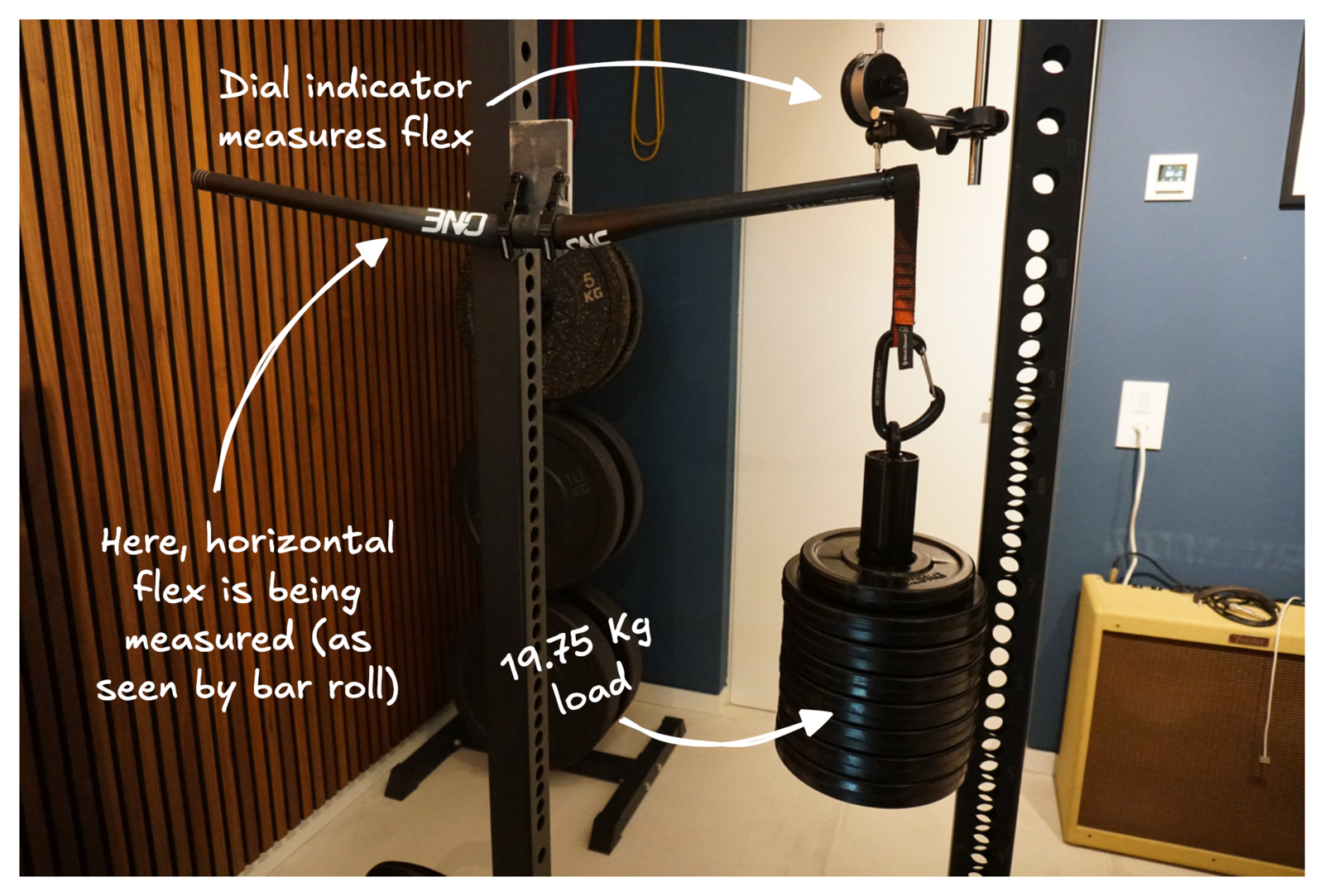
Once the weight was mounted, the amount of deflection was measured in both the vertical (i.e., with the upsweep aligned perpendicular to the floor) and horizontal (i.e., with the upsweep aligned parallel to the floor) planes. Three recordings in each plane of motion were taken for each bar, and the average compliance and spring rate were then calculated. All bars were cut to 780mm width (my preference) to ensure a like-for-like comparison.
Lab Results
The compliance values from the lab can be found in the table below. The 2nd and 3rd columns demonstrate the horizontal and vertical displacements of each bar with the 19.75 kg load applied, and the 5th and 6th columns show the calculated spring weights, where a lower value represents a more compliant bar.
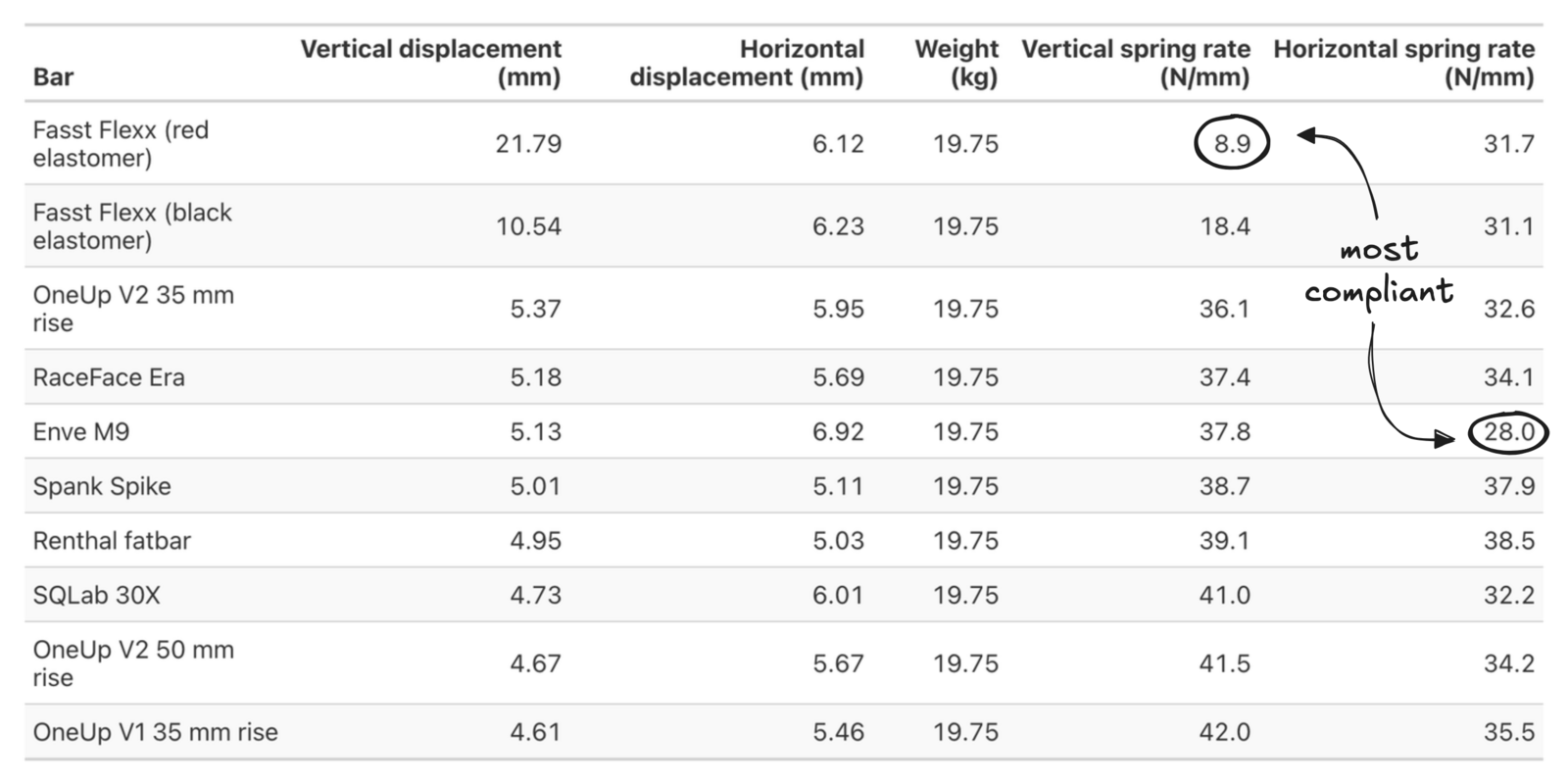
The most vertically compliant bar was the Fasst Flexx bar. When installed with the hard (red, second most stiff) elastomer, it was over four times as compliant as the stiffest bar on test, the OneUp V1 35 mm rise bar. This means it would take over four times the force to flex the OneUp bar the same distance as the Fasst Flexx bar. With the extra hard (black) elastomer installed, it was over twice as compliant as the same OneUp bar. The most horizontally compliant bar on test was the Enve M9, which was almost 1.4 times more compliant than the second most horizontally stiff bar, the Renthal Fatbar.
Except for the Fasst Flexx bar, the variance in vertical and horizontal compliance values between the different bars was small, as can be seen by the tight clustering of points in the strip plots below. This means that except for the Fasst Flexx bar, most of the other bars were similar in their compliance ratings.
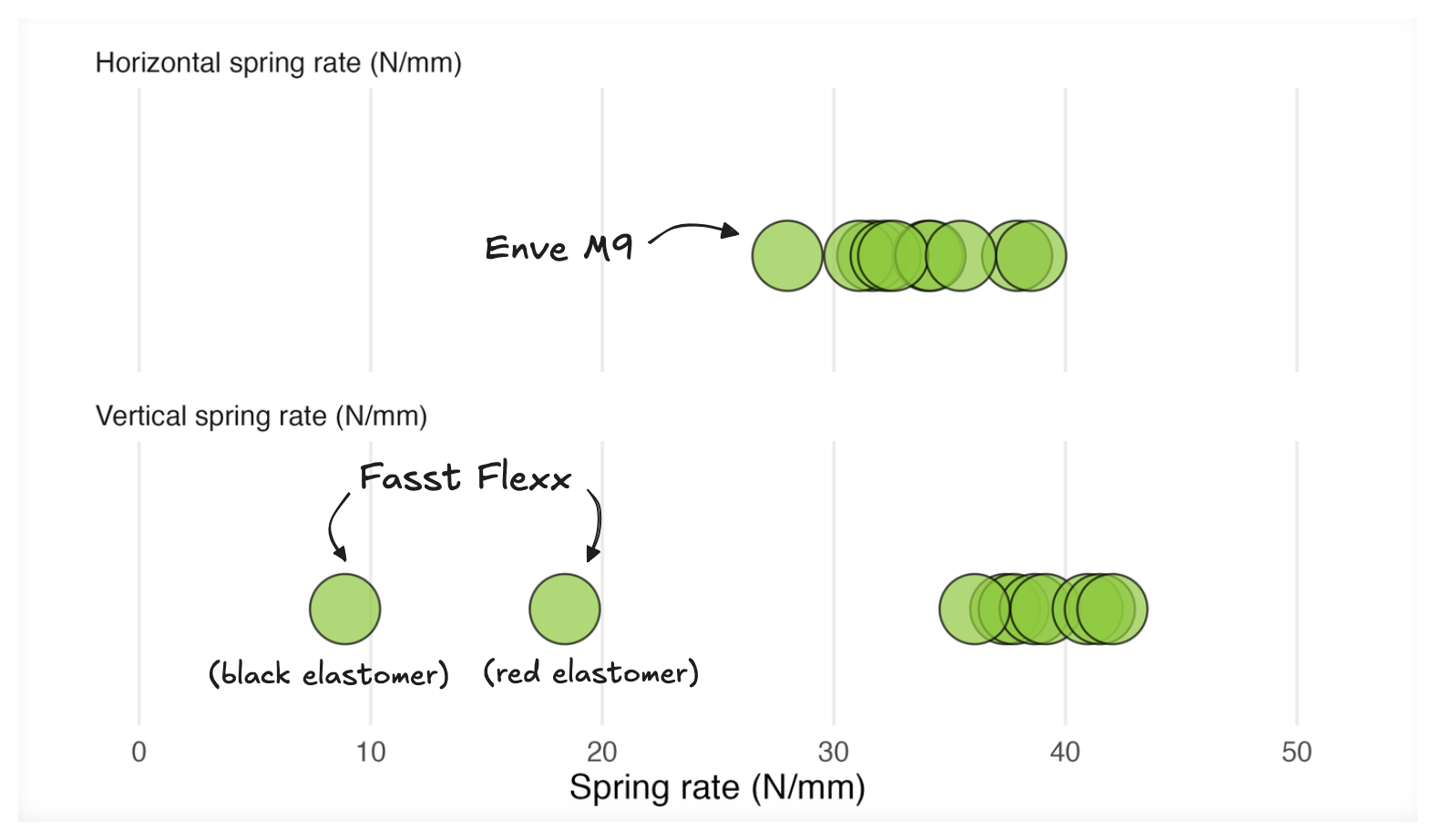
With the exception of the Fasst bars, each bar on test was more horizontally compliant than vertically compliant, with an average difference of 15.8% (as seen by the higher respective spring rates). After consulting with OneUp, they explained that:
"...with this test setup, we would expect to see more deflection in the horizontal loading state than in the vertical loading state. In the horizontal loading direction you describe (with the rise being parallel to the ground), the bars' rise acts as a perpendicular moment arm, causing torsional wind-up, as well as the bending of the handlebar, leading to more overall deflection."
In other words, when the bar is oriented horizontally, the rise is aligned perpendicular to the force acting on the bar. This offset causes a lever arm, introducing a twisting moment along the bar (which causes further displacement of the bar). When the bar is oriented vertically, the rise is aligned along the same plane as the force and so no torsional wind-up occurs.
From OneUp’s response, it can be implied that alternate test protocols exist which isolate torsional wind-up. While I pressed for more information on their exact protocol, I am still yet to receive a response.
Nonetheless, a perpendicular testing protocol was chosen in this test to ensure reproducibility and an apples-to-apples structural comparison across all nine handlebars while still approximating some of the compressive and steering loads the bars might expect under real-world conditions. Because of the stem-bar clamping interface, torsional wind-up will invariably occur while riding, and I struggle to see how it isn’t an important consideration when measuring overall flex.
On The Trail
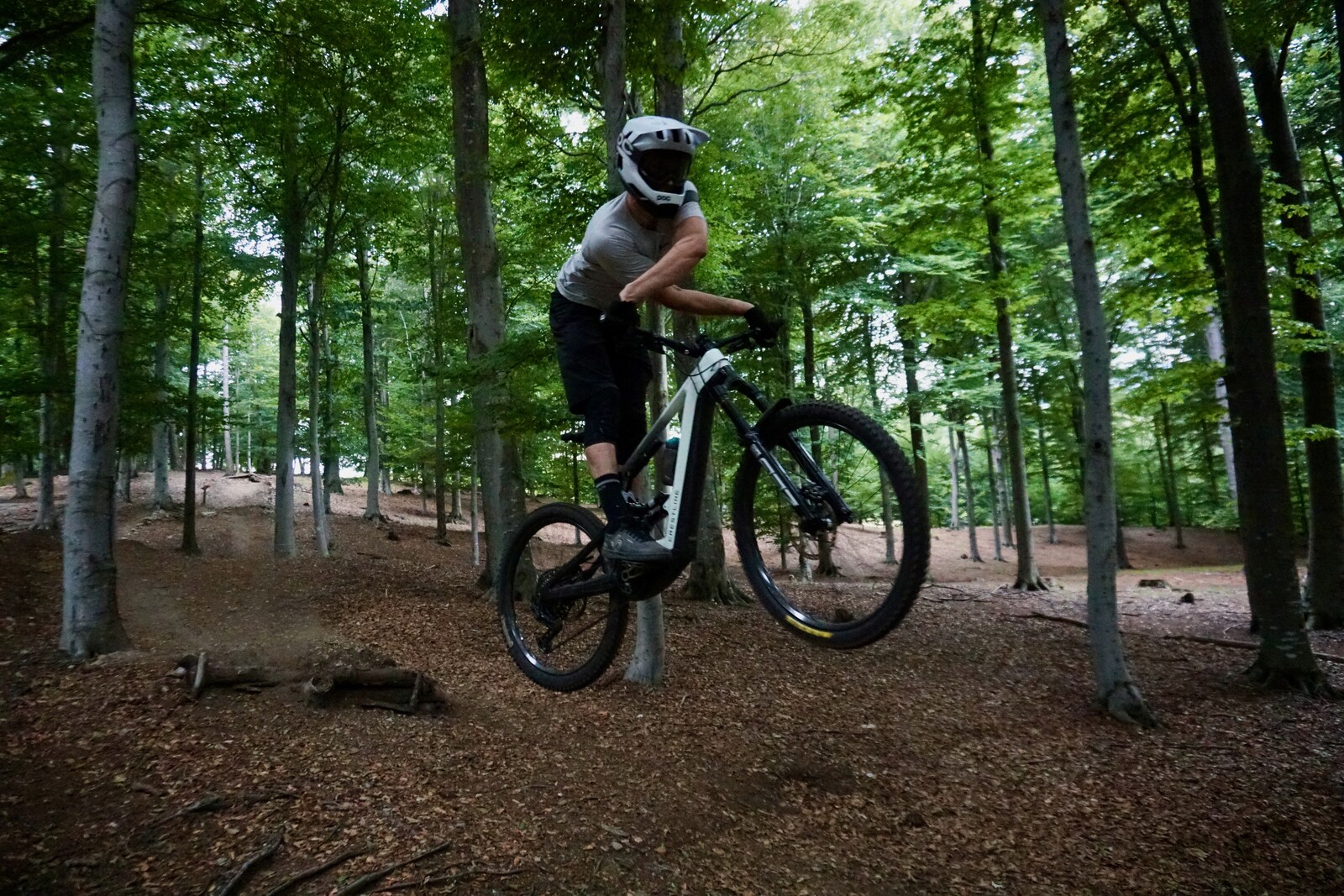
While quantifying compliance in the lab was useful for objectively benchmarking the bars against one another, how they perform on the bike is what ultimately counts. To start, each bar was swapped out on my long-term test bike, a Crestline LS160, over the course of a year and ridden over a variety of trails and conditions. This time served as a baseline period, allowing me to hone in and familiarise myself with the ride feel of each bar.
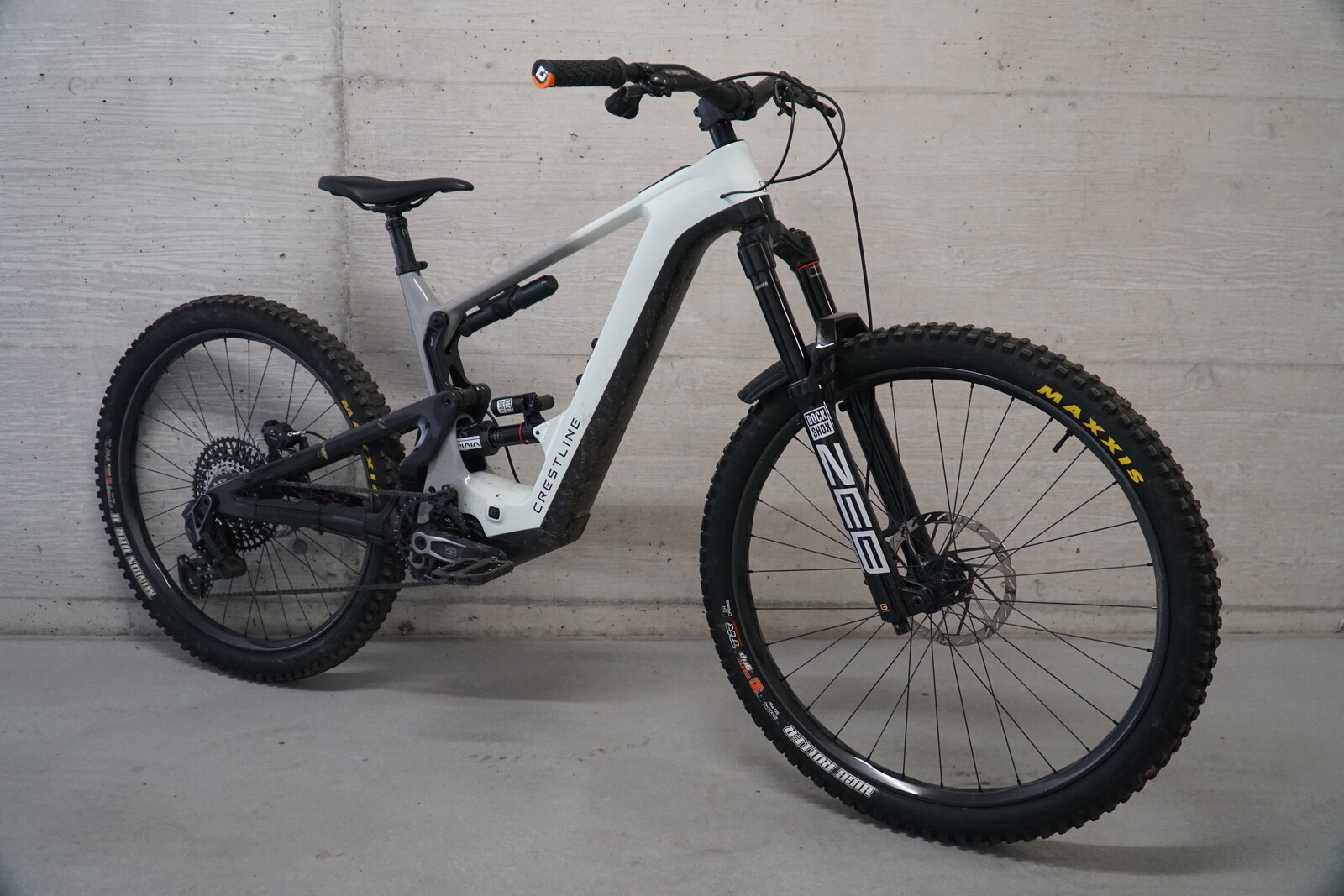
After this long-term testing period, the bars were then back-to-back tested over the course of two consecutive days on a fast local downhill track that contained a mixture of jumps, berms and off-camber roots spread over loam and loose-over-hard conditions. Each bar was ridden several times at random, and tyre pressures were checked before each run for consistency. This back-to-back testing allowed me to further hone in on the differences between each bar and benchmark their subjective feel against each other.

On The Trail Results
Both the long-term and back-to-back testing revealed two bars that stood out from the crowd: the Fasst Flexx and the OneUp (irrespective of the version number or rise). While I felt all bars on test performed well, any differences between them felt overshadowed by the distinct performances of these two bars.
Fasst Flexx
By changing out elastomers in the bars, the Fasst bars were the only bars on test with a tunable spring rate. Given that fork and tyre pressures are tuned to rider preferences, it makes sense that bar spring rate might be something worth tuning too for some riders.
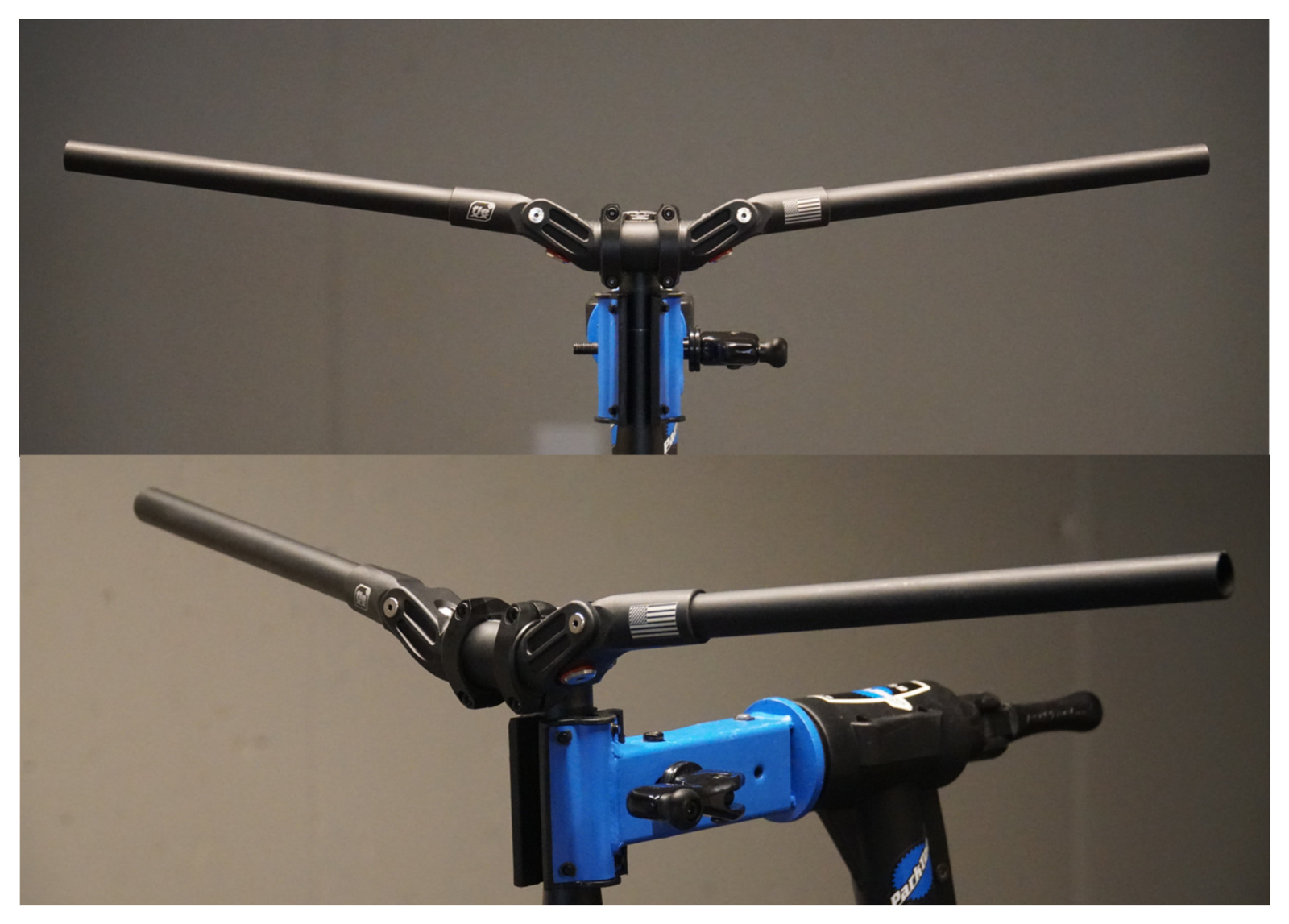
The bars were sent with the hard (red) elastomers installed, which, after discussions with Fasst, were the recommended starting point for my 85 kg (187 lb (84.8 kg)) weight. During the first outing on the bars, it became immediately clear that the Fasst bars were unique and not like any other bars on test. While many of the bars on test felt indistinct, the Fasst bars felt compliant with a capital "C". You could see the bars flex about the pivot just bouncing them up and down in the parking lot.
If seeing your bars move under your hands sounds unnerving, well, it kind of was. During the first few rides (with red elastomers), I had a few "oh shit" moments as the steering felt unlike that of traditional bars. Under hard compression, my hands moved more than anticipated, making it hard to locate the exact position of my front wheel. It kind of felt like playing a video game with a tiny bit of controller drift, where the character never quite moved exactly where I pointed the joystick. Even so, the first impression of the bars was that they were smooth and comfortable.
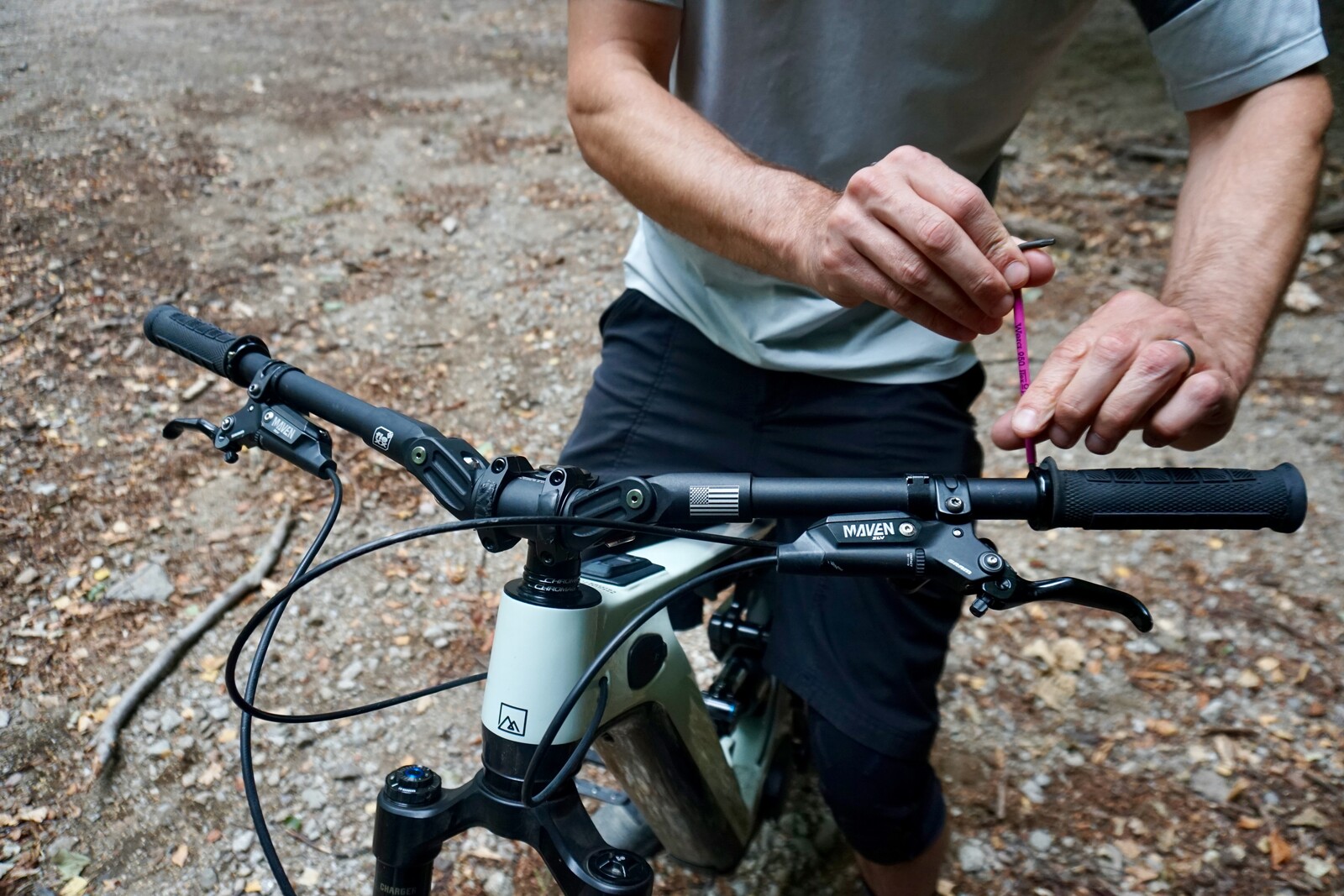
After being a bit fazed by the steering, I switched over to the harder black elastomers (which are twice as stiff as the red elastomers) in the hope I could maintain the high level of comfort I experienced on the red elastomers, but without any of the steering imprecision. While the black elastomers certainly felt more predictable to steer, for my weight, they lacked the magic carpet feeling of the red elastomers.
Switching back again to the red elastomers, something interesting happened: my brain adapted to the new steering dynamics and what at first felt imprecise started to become second nature. With enough practice, I was soon able to place my front wheel again. It felt like my brain had recalibrated and my proverbial video game player suddenly moved where I pointed them, with just the slightest hint of lethargy. For the racer looking for absolute precision and sharp handling, perhaps there are better picks, but for my needs, steering precision was a diminishing problem as I adapted to the bars.

Outside of the steering quibbles, the Fasst bars were the most comfortable bars on test. While they felt on par with the OneUp's at absorbing trail chatter (more on this later), they were undoubtedly champions when it came to absorbing square-edge hits. During sections of repeated hard hits, there was noticeably less pain in the outside of my palm with the Fasst bars. As someone who has been struggling with hand pain for years, this was a welcome relief. This makes the Fasst bars easy to recommend for anybody looking for the ultimate in comfort from their bars.
But, it isn't all sunshine and rainbows. While the benefits of these bars are plenty, they come with downsides: they are two to three times as expensive and heavy as other bars and the complexity of added pivots will invariably result in more maintenance. They also only come in 25mm rise, but Fasst have confirmed they are prototyping a taller rise version. When all is said and done, I think the Fasst bars live up to their claims, and for the right rider, will make a great upgrade.
OneUp Bars
Another bar that felt like it was doing something different was the OneUp bar. I first noticed this during the long-term testing. With each variant of the OneUp bar I tested, I was always left with a calm and muted feel on the trail.
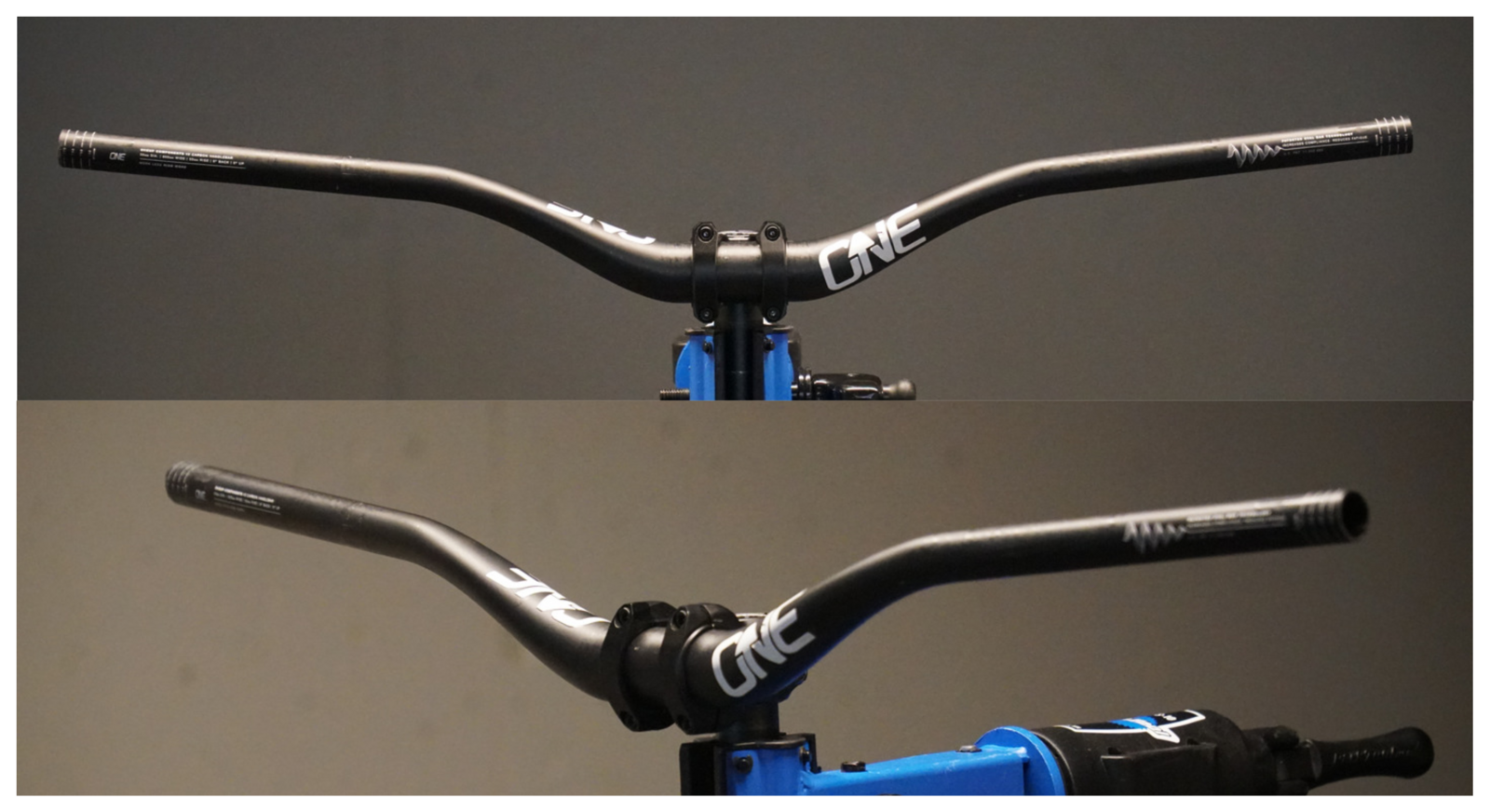
It wasn't until the back-to-back testing, that the magnitude of the muted ride feel became more apparent. Each time I switched back to the OneUp bars, any pain or discomfort I was experiencing felt noticeably reduced (except for the Fasst bar). With some of the other bars I would get cramps in my fingers from feeling like I was holding on too tight, but with the OneUp bars, this feeling was diminished.
At the end of the test track there was a right hand loamy corner which shoots you into a steep off-camber root section with a big compression. Each time I jumped on the OneUp bars I would get a little bit giddy at just how hard I could smash this right hand corner and subsequent root section and compression all the while feeling noticeably less feedback in my hands. It was on these roughest sections of track that the bar really shone.
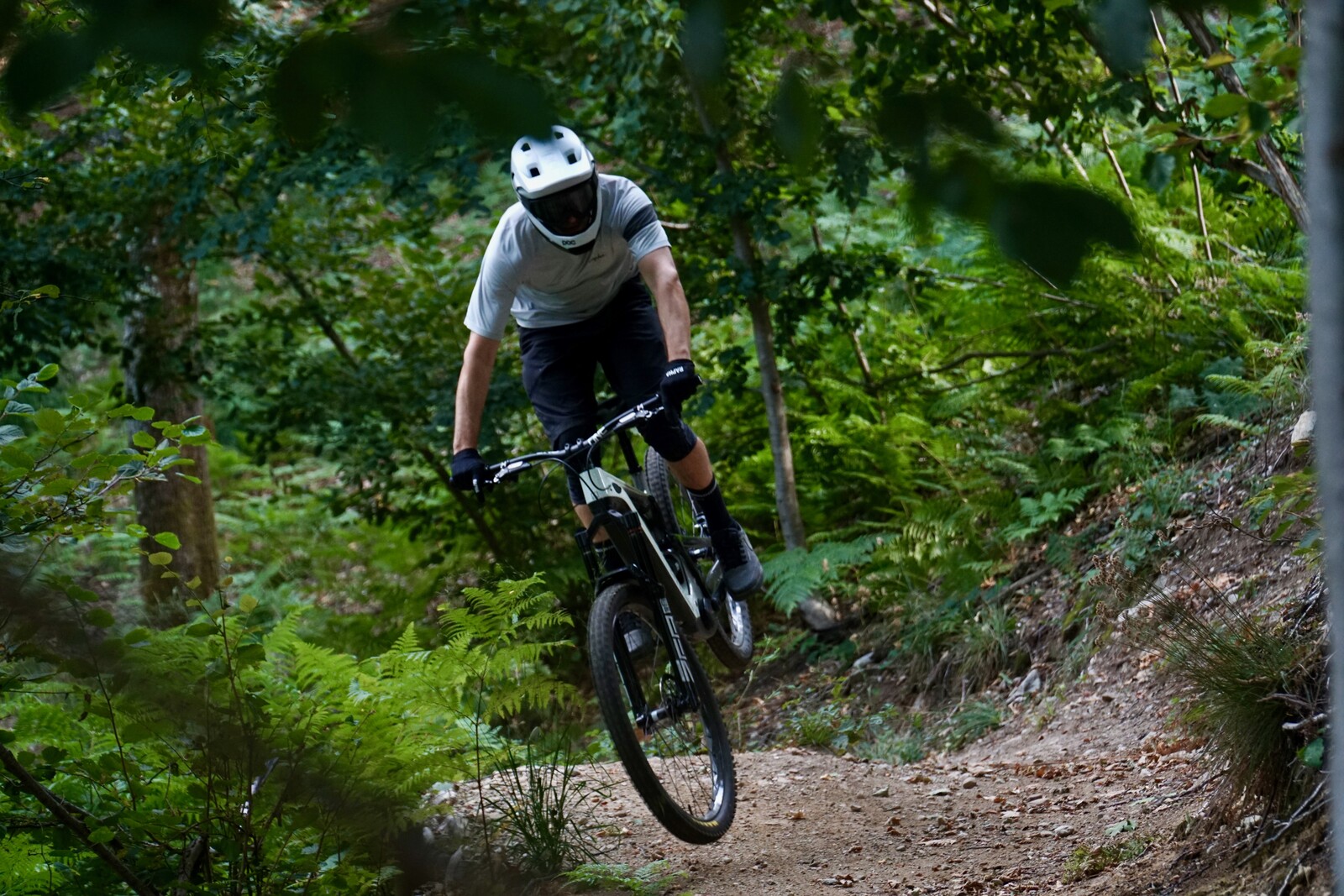
While the lab testing confirmed OneUp’s claim that the V2 bar is more vertically compliant than the V1, I couldn't notice the difference on the trail. Each version and rise variant felt in a similar performance ballpark. So, I would hold off upgrading to the V2 unless you specifically want one of the new rise and width-specific tunes on offer.
The Other Bars
Between the remaining bars on the test, there was no worst bar in this subgroup, and it was hard to distinguish any differences between them. This is partially backed up by the tight clustering of vertical and horizontal compliance values seen in the strip plot earlier.
However, given the marketing copy around RaceFace’s Era bar, my expectations were quite high, and I was a little disappointed to see no differences in the lab data and no perceivable differences on-trail. But in defence of RaceFace, they offer width-specific tunes; due to logistical difficulties, an 800mm bar was cut to 780mm rather than using their 780 mm-specific bar. Perhaps using their 780mm-specific tune bar would have made a difference.
Whether it’s the RaceFace bar or any of the others on test, I’d be happy to run any of them on my personal bike. For most people, I think there are bigger gains to be had in their suspension and tyre setup, and this is the first place they should look before worrying about their bars. For this group, I particularly liked the Renthal bars: they were the cheapest bars on test, the geo felt easy to get along with, and the shot-peened finish prevents controls from slipping, which is a nice touch.
My only minor quibble is that the SQlab bars have a perforated area to prevent the controls from slipping, but for my hand size, it was too close to the grip and unusable.
Does Compliance Improve On Trail Performance?
Having quantified the compliance of each bar in the lab and arrived at some on-trail impressions, the question remains: does compliance improve performance?
To start, I do believe compliance plays some role in performance. It was no surprise that the Fasst bar was the most comfortable on the test, given it had over four times the vertical compliance. On the trail, I could actually feel the bar flexing and taking the sting out of square-edge hits. While this could be due to some other property of the bar, it seems likely this was the compliance at play. However, given how tightly clustered the compliance values were across the remaining bars, it’s hard to say if minor variations translate to meaningful differences on the trail. It may be that compliance only becomes a noticeable factor when it exists in high magnitudes.

However, compliance doesn't paint the full picture of comfort. If it were the only factor, why did the OneUp bars feel noticeably different despite having similar compliance values to most others on test? The answer likely lies in the bar's damping. Unlike compliance, which simply measures deflection, damping is the ability to restrain vibratory (e.g., oscillatory) motion. A highly damped bar effectively mutes trail chatter before it can be fed back through your hands.
A bars damping properties are an important consideration and exist independent of a bar's compliance. This means a bar can both be stiff and damped (i.e., it doesn't flex under load but effectively absorbs trail chatter) or compliant and undamped (i.e., flexes under load but poorly absorbs trail chatter).
Without data to quantify each bar's damping, I can’t make a definitive statement on the damping properties of each bar on test. However, if I had to hazard a guess, I would predict that both the Fasst bar (thanks to its elastomers) and the OneUp bars were the most heavily damped on test, at least within the frequency range perceptible to my hands.
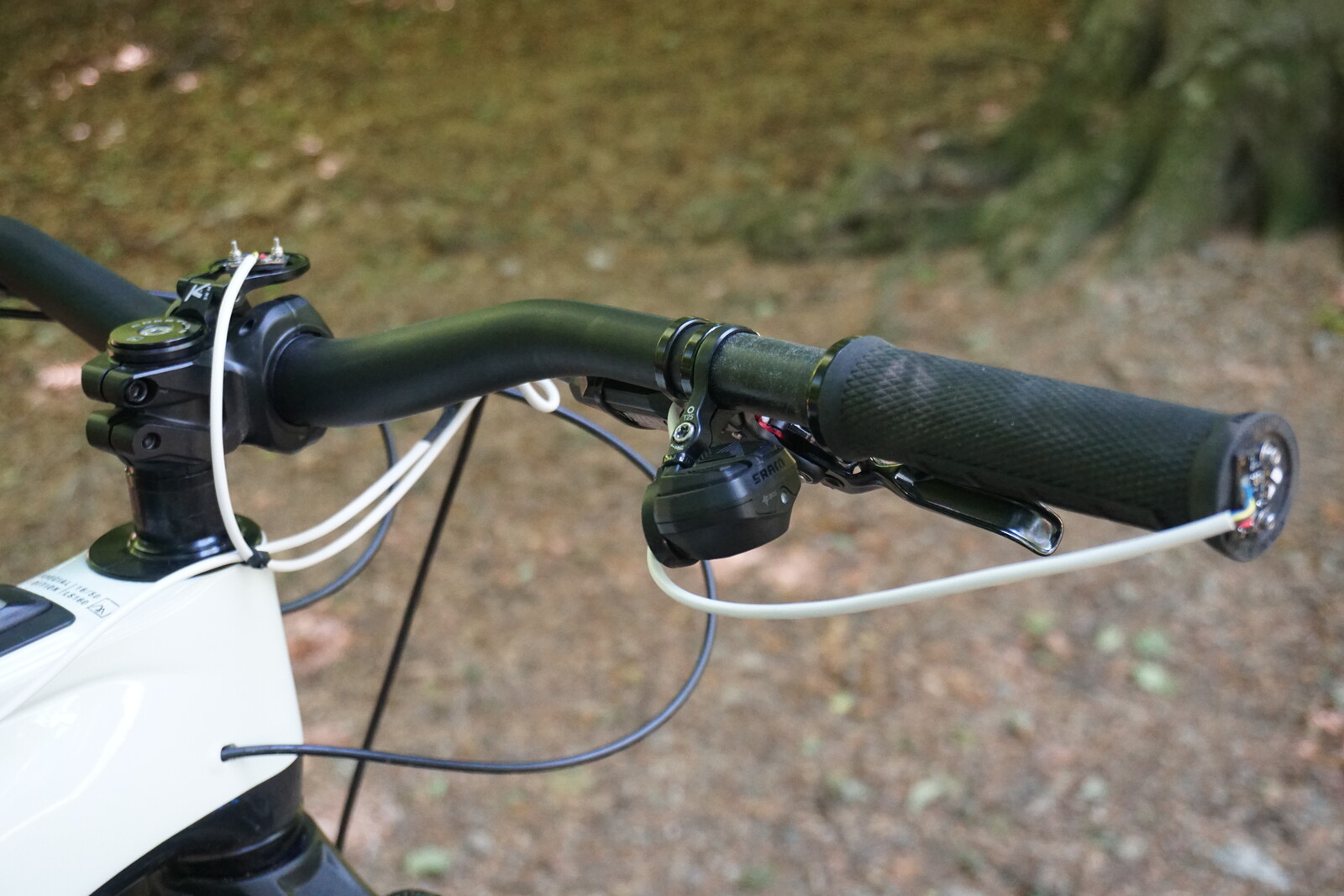
If you're wondering why I didn't just measure each bar's damping myself, well, I tried and failed. I rigged a homemade accelerometer setup to my bike, but I accidentally destroyed the system during data collection, bringing that experiment to an abrupt end. But even with working gear, quantifying damping is incredibly tough. Just look at OneUp Components, who told me: "We're able to test for, quantify, and validate compliance between different handlebars, where we're still working to validate and quantify damping properties to the same extent."
It’s entirely possible that other bars on the test are also well-damped. For instance, Spank’s white paper claims their proprietary Vibrocore foam insert significantly reduces harmful vibrations, specifically in the common 8–50 Hz frequency range. While I didn't notice this dampening effect on my specific test trails, it’s plausible that these bars are filtering out a class of vibrations that eluded my perception.
Ultimately, I can only judge what I could measure and feel. On that front, the Fasst Flexx and OneUp bars stand out as my top recommendations, so much so that I'll be keeping both and swapping them between my own bikes.
About the Tester
MTBSA contributor - Age: 35 / Years riding: 23 / Height: 6’ 2” (188cm) / Weight: 189 lb (86 kg)
Mike grew up racing BMX, but has always felt most at home on a mountain bike. Growing up on a diet of Anthill Films and Drop In TV, he most enjoys jumps and steep loamy tracks. He currently works as a statistical software engineer and enjoys applying this mindset to tinker with bikes.
View key specs, build side-by-side comparisons, and review handlebars in the MTBSA Product section.
Source and credits
Editorial contribution: MTBSA contributor.
What's your take?
Share your experience. All comments are reviewed before appearing.
Sign in to join the conversation