
By MTBSA contributor
Jun 16, 2026
A few years back, while visiting Forbidden Bikes’ HQ, I saw one of their riders rolling around on a high-pivot frame shod with a full XC trim. It caught me off guard because I was there to check out the Druid V2 (Forbidden’s 130mm-travel trail bike). Was this just a goofy experiment or were they testing the XC waters? Surely, even Forbidden’s marketing lore wouldn’t be enough to sway watt counters and calorie counters over to the dark side of a high-pivot. The bike in question turned out to be just a Druid V1, however, Forbidden was about to enter the world of XC.
For the 120mm-travel Reya, Forbidden decided to go for a “regular” suspension design. It may have a carbon frame, two 29” wheels, and 120mm of travel, but there’s very little that’s regular about this XC bike.
Reya Details
• 120mm travel, 130mm fork
• Full carbon frame
• Dual 29" wheels
• Four-bar, Horst-Link suspension design
• Sizes: S1, S2, S3 (tested), S4
• Size-specific chainstays (S3: 449mm)
• Weight: 12.9 kg / 28.5 lb (T2 model, S3 size)
• Price: CAD $7,699 - 12,999 / USD $6,299 - 10,499
• Frame kit: CAD $4,199 / USD $3,399 / UK £3,199 / EU €3,799
• forbiddenbikes.com
Forbidden has applied its Trifecta geometry theory to the Reya where the front-to-rear centre ratio holds across all frame sizes. You can read more about that on the Forbidden website, but the Cole’s Notes is that the Reya’s geometry is extreme, particularly the rear half of the bike. Find me another 120mm travel bike with a 65-degree head tube angle and 449mm chainstay length (S3 frame size).
| Forbidden threw conventional XC geometry out the window with the Reya. This isn’t your mom or dad’s awkward 29er from 2015 that tries to pitch you over the bars the moment it encounters the smallest pile of rocks. It's long, low, and slack - a conversation we've heard over and over with enduro bikes. Except this is an XC bike - an XC for the new-school, where the downhill pace is just as important as the climb. What's more is that the stability and grip that the Reya delivers exceeds some longer-travel bikes I've ridden. Make no mistake, this isn't a bike you can blindly huck into oblivion. If you treat it nicely, you'll be rewarded with a lighter, freeing sense on almost any trail.— MTBSA contributor
Frame Details
Aesthetically, the Reya is an eye-pleasing bike. The slim, round tubes flow straight from the rear axle to the head tube, almost reminiscent of a hardtail. Those play into the structural elements and qualitative findings of the frame too.
Where have we seen small, round tubes before? Oh yeah, steel frames. They’re known for their damped ride qualities. Although it’s a totally different material, the Reya’s tubing is comfortable in the right zones without being a limp noodle.
Forbidden decided to pass on internal frame storage. It adds complication to the frame design with extra pieces, and ironically, cutting a hole in the downtube adds weight, since more material is needed to reinforce the area. That said, the Reya (2,270g, S2) is far from the astoundingly light Scott Spark RC (1,427g, size MD). Then again, the Reya isn’t intended to be an XCO race bike.
Another consideration that they tossed out was fitment for a second water bottle. I suppose, if you really wanted to, you could rig up your own on the underside of the downtube. Otherwise, a small hydration vest is your other option.
The final details aren’t skimped either. Cables and hoses don’t take the tourist route through the headset, but there is one unusual feature. Forbidden added a second route through the downtube for a remote shock lockout. Bikes have been ditching cables for batteries at a staggering pace, but this is one extra line that I think could come in handy on the Reya.
Suspension Design
The first thing you probably noticed about this Forbidden full-suspension bike is the lack of a high-pivot and idler wheel. Building the suspension platform around a 4-bar, Horst-Link layout defined an axle path better suited to this style of bike. As much as Forbidden has done to reduce drag on idler wheels, I could only imagine the moaning from watt-counters and the efficiency loss.
Overall, the Reya’s suspension is very progressive. A small, carbon rocker link starts at a fairly high leverage rate around 3.5, or possibly higher (it’s not clear based on the graph provided). The leverage curve, combined with a bearing eyelet, helps the 45mm stroke air shock break into the travel effortlessly. Towards the end, the rate drops to around 2.0, ramping up the progression. We’re working with 120mm of travel, so bottom-outs do happen; however, they can be anticipated.
In general, the Reya’s suspension is a world away from some wooden-feeling XC bikes, aimed specifically at racing. Wallowy would be an overstatement, but I’d err on the high side of shock pressures, as the geometry can be swayed quickly by just a few psi difference, but more on that below in the Setup section.
Geometry
The numbers behind the Reya make it very unique, almost polarizing. It may split riders into two camps. On one side, riders accustomed to the fit of a traditional XC bike (short wheelbase, steep head tube angle, slacker seat tube angle) may find the fit and handling foreign. Others, coming from the gravity side of the sport, who are used to stretched wheelbases and slack head tubes, will rejoice, “An XC bike that feels like my downhill bike!”
At 65 degrees, the Reya is as slack as the legendary Iron Horse Sunday.
Taking the effective top tube length into consideration is another important factor. The seat tube angle is steep for this category, at 77 degrees. That’s close to most modern enduro bikes, which have become increasingly steeper to hold your weight forward as the bike sags into the plentiful travel. The Reya only has 120mm, though. For that reason, I would anticipate most riders won’t need to slam the seat forward. As always, trying before you buy is a wise decision.
Like all of Forbidden’s bikes, the chainstays make up a large portion of the Reya’s wheelbase. They are sized proportionally, according to their ideal front-to-rear centre ratio, so the larger the frame, the longer the chainstay. The S3 uses a 449mm rear centre, putting the Reya in a unique spot for this travel bracket. It’s long, at least on the S3, but not unmanageable. Where things get crazy is the 464mm chainstay on the S4.
The reach on the S3 is 475mm, 5-10mm shorter than most brands’ size Large frames. I’d suggest studying the wheelbase of other bikes that you’ve been fond of and using that as a gauge more than the reach.
Specifications
Specifications
Release Date | 2025 |
Price | $7699 |
Travel | 120 |
Rear Shock | RockShox Deluxe Ultimate, LinearXL |
Fork | RockShox Pike Ultimate, 130mm travel, Charger 3.1 RC2 damper |
Headset | Cane Creek 40 ZS44/ZS56 |
Cassette | SRAM XS-1275 |
Crankarms | SRAM S1000, 165mm, SRAM 32T Alloy Chainring |
Bottom Bracket | SRAM DUB BSA |
Rear Derailleur | SRAM GX T-Type |
Chain | SRAM GX T-Type |
Shifter Pods | SRAM Pod Rocker |
Handlebar | OneUp Alloy, 20mm rise, 800mm width |
Stem | BikeYoke Barkeeper, 45mm length |
Grips | Forbidden lock-on, 128mm length |
Brakes | SRAM Motive Silver, organic pads, 180mm Centerlock F&R |
Wheelset | DT Swiss XR 1700 Spline |
Tyres | Front: Maxxis Forekaster, 29x2.4" 3C MaxxTerra, EXO, Rear: Maxxis Rekon, 29x2.4" 3C MaxxTerra, EXO |
Seat | Fizik Terra Ridon X5, 145mm Width |
Seatpost | OneUp Dropper Post V3 31.6mm | Size Specific Travel S1:150mm / S2:180mm / S3:180mm / S4:210mm |
Test Bike Setup
Air pressure on the Reya is key. Forbidden provides a comprehensive suspension setup guide. The advised range is between 32% sag (measure while seated) for the soft side, while 29% is the recommended firm setup.
I preferred 28% sag to find support in the rear suspension a little sooner in the travel. That higher air pressure lined up with the firmer air pressure in the fork. Essentially, I set the bike up for someone who weighs closer to 88 kg (190lb (86.2 kg)).
Admittedly, I’m at the lower height limit for the S3 frame. I factored in the effective top tube length, as well as reach, and have been happy with that decision. I did need to swap the 210mm dropper post out for a 180mm so I could lower the post and still make use of the full travel. The saddle wasn’t completely slammed forward either.
A few other changes I made were chopping the bars down to 760mm, and eventually even narrower to 750mm. By doing this, my arms had more range of motion to move back and forth, and weight the front or rear wheel when needed. The stock grips were immediately banished to the storage bin, as were the organic brake pads.
MTBSA contributor
Location: Squamish, BC, Canada
Age: 39
Height: 5'10" / 178 cm
Weight: 170 lb (77.1 kg) / 78 kg
Industry affiliations/sponsors: None
Instagram: @mattb33r
Testing Info:
Putting miles in on the Reya was very enjoyable and made lugging an enduro bike out of the garage a bit demoralizing. I kept the gradient and severity of the trails in check and mainly aimed at faster, low-angle singletrack. Many of those routes have been part of race courses throughout the decades of XC racing in and around Squamish, such as Lower Powersmart, Word of Mouth, and Powerhouse Plunge (all of which have seen recent work - thanks, trail builders). Springtime moisture didn't last long, but luckily, a few showers kept dry spells to a minimum.
Climbing
If you’re coming from a traditional XC bike with a short 435mm chainstay and a steep, 68-degree head tube angle, expect a polarizing ride. The Reya won’t be for everyone who regularly rides in Lycra. Forbidden knows this and has leaned into it: the Reya is supposed to be different.
The first switch-up is the climbing position. The seat tube angle is 2.5 degrees steeper than that of a Specialized Epic 8 Evo and even a full degree steeper than that of a Transition Spur (more on that comparison below). Combined with the long chainstay, it may actually mean shifting some weight back to get traction. You'll have no worries about lifting the front wheel.
Secondly, the leverage rate is more akin to, again, an enduro bike. Generally, XC bikes start firm and then settle into a softer zone. The Reya throws that concept out the window and is plush from the get-go. This invites you to stay seated more often while maintaining traction over fickle little roots, but it can have some negative effects on the geometry when you start to jump on the cranks.
When the sensitive suspension compresses, it further slackens the head angle and changes the balance of the bike quickly. This takes some core work to keep the Reya’s front wheel pointed straight when climbing steeper grades or rounding super tight switchbacks. Through undulating terrain, when you're moving in and out of a seated position or pumping the ground to build speed, it can feel almost too active. Wisely, Forbidden anticipated this with a workaround: the frame features cable routing for a remote shock lockout. Adding an extra cable seems like blasphemy on such a polished-looking frame, but I think it would be a worthy and highly useful feature.
The Reya also has a low BB. Forbidden accounted for this by specifying 165mm cranks. Say what? Short cranks are becoming the norm, even for some World Cup XC racers. It may take some learning when and where to time your pedal strokes between obstacles. As you might expect, many of those points are forgotten about when it's time to descend.
Descending
The Reya’s suspension delivers traction and support like a bigger travel bike. It lets you ride the way you intended to, instead of succumbing to the limits of shitty suspension and geometry designed only to climb. The only problem is, you can easily send it too hard. Many riders will reach for burlier casing tyres, more robust wheels, and bigger brakes, but that’s the wrong move, if you ask me.
The intent of the Reya is so that you can feel like you’ve pressed the fast-forward on flatter trails. Don’t be dumb. Don’t try to build the Reya into something it’s not. Be smart, and you’ll have an absolute blast carrying speed on trails where your enduro bike left you feeling bogged down.
Composure is not always found in short-travel bikes, but the Reya says differently. The sensitive, yet supportive suspension stays active under braking. For 120mm of travel, it does well at keeping the wheels on the ground through chatter and even handles the big chop nicely. Hitting small features or dropping into large holes in the trail can touch the bottom, but it’s not painful. When it does occur, it’s usually something you can predict and brace for.
The long wheelbase and slack head tube angle help out massively in that regard, too. You don’t feel like you’re riding a short rocking horse, about to get bucked over the bars. It’s part of the reason why you can ride so fast and confidently on this “XC” bike. Across high-speed marbles and dusty machine-made tracks, you feel grounded and safe when cornering. Usually, the speed and frequency of this type of trail can make a short travel bike feel like a shopping cart. Even with thinner, speedy little tyres, the Reya remains very quiet.
There’s a sense of calmness to the frame that I haven’t found on other carbon bikes. It could be the round and slim tubing I mentioned earlier. Beating down those high-speed washboard trails comes with less shuddering than expected. It’s just another reason why the Reya handles speed with ease.
Finding weak points in the Reya’s descending ability is honestly a challenge. One zone where it takes some planning and a bit more finesse is wiggling around tight, steeper corners where you can’t lean the bike over as much. The longer wheelbase might mean a Euro-hop or keeping tabs on derailleur clearance, but that’s a tradeoff to be expected.
What's the Best Value?
The top model in the Reya lineup caters towards a lighter, racier component trim - you can tell by the tyres alone. The gucci gold Reya T1 has a Fox 34 SL Factory fork, DT Swiss XRC 1500 carbon wheels, and a full SRAM XX Transmission drivetrain. As usual, when the weight drops, prices take a hike. The T1 build weighs in at 11.74 kg / 25.88 lb (S2 size) and costs $10,499 USD. Dang!
Our review T2 model is considerably less expensive than the T1 at $7,699 USD and only 1.25 kg heavier. A high-performance build remains with a RockShox Pike and Deluxe of the Ultimate variety. Then there’s also SRAM’s GX Transmission, Motive Silver brakes, alloy DT Swiss 1500 XR wheels, and knobbier tyres. Not bad.
The winner for value in my books is the $6,299 USD T3 option. This one only gains a few hundred grams, but maintains solid suspension, wheels, and brakes. All of the tradeoffs are worth the savings, if you ask me.
Reya T3: CAD $7,699 / USD $6,299 / UK £6,099 / EU €7,299 // RockShox Pike Select+ fork, RockShox Deluxe Select+ shock, SRAM Eagle 90 T-type drivetrain, SRAM Motive Bronze brakes, DT 1900 X wheels w/370 Hubs, Forbidden cockpit, Maxxis Forekaster (F)/Rekon (R) 3C Maxx Terra EXO tyres.
Weight: 13.34 kg / 29.4 lb (S2 size)
How Does It Compare?
The cage match you've been waiting for: the Forbidden Reya versus the Transition Spur. The Spur is one of the bikes that helped spark this new-school approach to geometry for bikes in the 120mm travel bracket. It all starts with a carbon frame that uses a flexstay suspension layout, eliminating the need for bearings at the dropout pivot. At 5 lb (2.3 kg) flat (2.27 kg), the Reya wins out by 0.59 lb (270 g), possibly due to its slim tubing and lack of downtube storage.
What matters more than a cup of water in weight is their ride qualities on the trail. The Spur’s chainstay is shorter, and the head tube angle is steeper, even in the low mode. That makes it slightly reserved and sensitive on the downhills, yet it's still able to rally.
The Spur's seated position is more relaxed with a slacker seat tube angle, which puts more weight over the shorter back end. The result is a longer cockpit feel that, at times, calls for a slight weight shift forward to keep the front end down. Ground clearance is another area that stands out. Although both bikes rock shorter 165mm cranks, navigating pedal strokes through rocks, stumps, and other tricky pieces of climb trails is breezier on the Spur.
Suspension-wise, the Spur is still adequately supple, but isn’t as eager to move into the travel, for better or worse. The sensitivity is good, but not as fluttery as the Reya. Where it wins out is sprinting and pumping. The Spur has a slight edge in response here.
All of these differences seem small on the screen in front of you, but it’s the sum of the parts that makes the Reya profoundly unique on the trail.
When it's time to throw down cash, it's a toss-up: both bikes have excellent parts kits with only $200 between the two of them. If in-frame storage or geometry adjustments are really important to you, then the Spur has those. It may come down to your taste in suspension, brakes, and drivetrain: the $7,499 Spur is a full Shimano/Fox dealio, where the Reya uses the SRAM/RockShox tag team.
Technical Report
OneUp Alloy 20mm rise bar and Forbidden grips:
On paper, a 20mm-rise bar seems appropriate, but I maxed out the stem overlap with the steer tube. Swapping for a higher-rise bar wouldn’t be an unreasonable proposition. As a result, a fair bit of weight is transferred into the grips. I went for a cushy pair of SDG Thrice Open Core from day one. The stock grips aren't very thick or soft, plus they have an odd tapered shape. Your hands will thank you later.
Maxxis Forekaster/Rekon: Don’t underestimate this duo. The Rekon’s rippled tread is more predictable than downright grippy. But that allows it to adhere to a variety of soil and rock. Braking, climbing and cornering are trustworthy in any scenario. Up front, the Forekaster performs best in looser dirt. I wouldn’t rule out something with more supportive sideknobs, given the corners you can carve with the Reya.
SRAM Motive brakes: Dario isn’t afraid to put Mavens on his XC bike, and you’re welcome to do so too; however, I think the Motives are a fine fit for the Reya. The one stipulation is the pad compound. Switching to metallic pads will boost braking effectiveness on extended or steeper descents. Just remember, once you commit to one pad material, those rotors will be matched to that type best.
Pros
+ New school geometry opens up much more terrain for an XC bike
+ Unbeatable suspension performance in the 120mm-travel category
+ Quiet and muted frame
Cons
- Handling is a bit wonky across undulating, low-speed trails
- No geometry adjustments (if you care about that)
Images supplied with this review
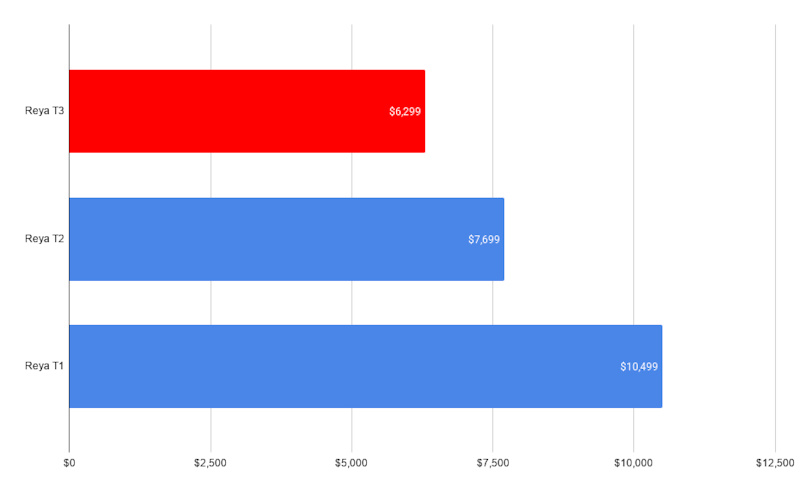
Images: MTBSA contributor. Charts retain the currencies and measurements shown in the original.
For South African readers
Overseas prices in this report are not confirmed South African retail prices. Check local availability, warranty support and the complete rand price with your retailer. No MTBSA test score has been assigned.
What's your take?
Share your experience. All comments are reviewed before appearing.
Sign in to join the conversation