
By MTBSA contributor
Teewing first hit the e-bike market one year ago with the 150mm-travel Turbo Force, which used an Avinox M1 motor. The bold, orange marble paint job turned heads, but their latest bike in the line attracts attention for a different reason.
The Flux One Pro eMTB is a brawler with significantly more travel, MX wheels, and Avinox’s most recent M2S motor with even more power. Pair that with geometry that’s built to attack, but not lag. Essentially, this is a freeride bike with a built-in shuttle system.
Alongside a full carbon frame and several carbon components labelled with a Teewing badge, it keeps the weight under the 50 lb (22.7 kg) mark with an 800 Wh battery: 48.5 lb (22 kg) / 22 kg to be exact.
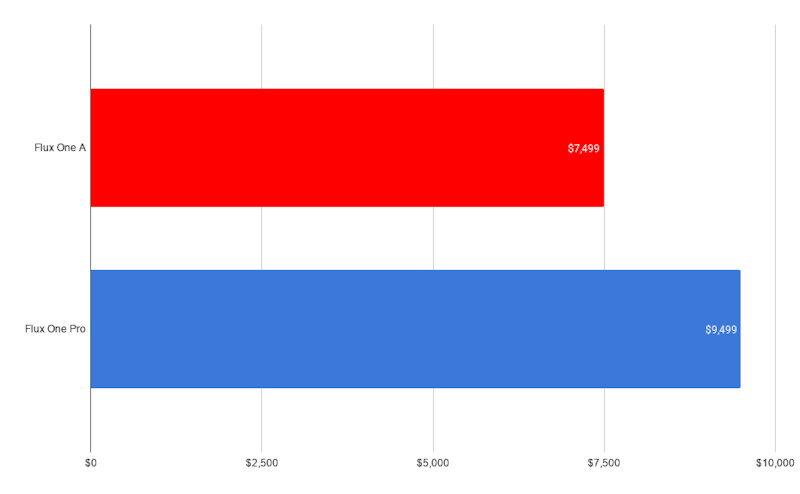
Two Fluxes sit in the retail-based catalogue: the Flux One A at $7,499 USD, and the Flux One Pro on test, which tops out at $9,499 USD. Each receives the same motor, battery, and frameset. Fox suspension, at Performance and Factory levels, separates the two, but offers reasonable value compared to other bikes out there using similar builds with less powerful motors.
Flux One Pro Details
• Carbon frame
• Wheel size: MX (29" compatible)
• Travel: 178mm rear (170mm w/ 29"), 180mm fork
• Avinox M2S motor: 130 Nm torque, 1300 W (150 Nm in Boost)
• Multiple battery options (800 Wh tested)
• 63.5-63.8 degree head tube angle
• 434-436mm chainstay
• Sizes: M, L (tested), XL
• Weight: 22.0 kg / 48.5 lb (actual)
• Price: $7,499-9,499 USD / $9,295-12,595 CAD / €6,899-8,999 EUR
• More info: teewingbikes.com
Contents
MTBSA's Take
| Teewing may not be a household eMTB brand yet, but they serve up a compelling option in the big-hitter category with the Flux One Pro. Between the high torque-to-weight ratio of the Avinox M2S motor and more responsive geometry chassis than you may not expect to find on a high-pivot monster truck, it's a riot to lap jump tracks and point down big freeride moves.— MTBSA contributor
Frame Details
Teewing intended for the Flux to play hard, but not limit its use to extreme trail choices only. It mimics the design choices you’d find on a “super enduro” style bike: long-travel, high-pivot suspension, geometry adjustments, and two rear wheel-size options. The full carbon frame receives a Category 5 rating, though it isn’t dual-crown compatible.
As with the majority of high-end Avinox-equipped frames, the Flux One’s carbon frame features an inlaid OLED touchscreen. It makes the right-hand side remote control on the handlebar somewhat redundant, though its size and wireless connection make it unobtrusive. Many of the functions found in the Avinox app can be chosen from here, even in the rain. As we move into the short days of the Northern Hemisphere’s autumn months, a convenient USB-C connection can power a bar light; however, it lies at a vulnerable angle, sticking straight out of the top tube.
From a wrench’s perspective, the Flux is a reasonable bike to work on. The idler threads into the main pivot axle, and the chainstay flip-chips can be rotated 180 degrees without removing the rear wheel, if you’re mindful of the bolt thread depth. All of the hardware remained rock solid, including the trunnion bolts on the large rocker link.
Fixes become more time-consuming when fishing hoses and wires through the choked-up BB-chainstay connection, but that’s not uncommon, even on bikes without motors. More importantly, the dropper post cable never hung up when adjusting the saddle height.
Battery and Motor
I hear a lot of riders state that they wouldn’t buy an e-bike unless it has an Avinox motor because the power is simply unmatched. That’s a fair objective. The M2S pumps out an impressive 150 Nm of torque in a 2.6 kg motor package. That makes the torque-to-weight ratio very enticing.
On road climbs, the M2S in the Flux Pro will dust a Bosch CX Performance Line, especially when the grade becomes steep. Even the CX Race version is not in the same league. Once back on trail climbs, switchbacks and corridor width will close that gap.
The Avinox can come at a cost, though. Depending on your ride time, using Turbo (not even the highest Boost mode) will deplete the battery quickly. If your planned ride is less than 1200m, keep the cadence around 85 RPM, and weigh similar to me (78kg), you can safely plan on 1300m of vert in dry conditions with the stock tyres.
The Flux One Pro ships with the older 800 Wh battery, which means the peak power of this M2S setup is limited to 1300 W. Avinox now offers a 700 Wh with newer cell technology, bringing the M2S up to 1500 W of peak power. Unfortunately, the Flux Pro cannot accept those. You'll still be able to tap into the maximum torque, which can be more important, as Seb Stott pointed out in this useful article.
Suspension Design
The 178mm-travel Flux distinguishes itself from the Turbo Force by choosing a high-pivot design, producing 30mm more travel and a rearward axle path for the majority of the wheel displacement. An idler mounted concentrically to the main pivot manages the chain growth and works around the I-track patent.
E-bikes tend to aim for higher anti-squat values to hold the dynamic geometry steady as more torque is applied to the chain than an unassisted bike. That’s not usually an issue, except when an idler wheel is in play. The smaller amount of wrap on the little pulley is subjected to higher forces than a standard 34-tooth chainring, which can lead to faster drivetrain wear.
The flip-chip on the lower shock mount alters the geometry, but also the progression. High gives less progression; Low adds progression. The chainstay flip-chip adjustment nearly retains the head angle and BB height when choosing a 29” rear wheel; however, Teewing notes that the travel is reduced from 178mm down to 170mm.
Geometry
Travel-wise, the Flux may be overkill for some riders, but its geometry restores a level of spryness that wasn’t expected. Part of that comes from the head angle not being overly raked-out at 63.8 degrees (High, 27.5” rear wheel). That number drops down by 0.3 degrees when moving the shock to the low position. Oddly enough, the dual 29” wheel setup sits slacker by an equal amount.
The chainstay is another area of interest, with the 27.5” mode measuring 434mm (High, 436mm Low), but then growing to 450 and 452mm in the 29er setting.
Adding to that, the Flux has a minimal amount of BB drop (6/10mm) with the 27.5” rear wheel. Some riders will argue that e-bikes don’t need as much BB drop as unassisted enduro bikes due to their increased mass, because a higher centre of gravity is needed to initiate turns. Increased ground clearance for some motor casings is another valid point. Whether that’s a pro or con can come down to the rider’s preference.
As an emerging brand, it’s no surprise to see a limited size range as carbon frame mold costs stack up quickly. Teewing decided to go for just three sizes: Medium, Large, and X-Large. The reach numbers are typical of what you’d find across other brands: this size Large measures in at 480mm in the High setting, while the Medium is 455 and an XL tops out at 505mm.
Like most modern enduro bikes, the Flux’s effective seat tube angle is plenty steep, sitting at 78.3 degrees in the High position.
Specifications
Specifications
Release Date | 2026 |
Price | $9499 |
Travel | 178 |
Rear Shock | Fox Float Factory X2 - 2 Pos Lever | HSC | LSC | HSR | LSR | Metric Trunnion 205*65 |
Fork | 2027 Fox 38 Factory 180mm - 8, K, 29in, Grip X2, HSC, LSC, HSR, LSR, Shiny Blk, Neutral/Gloss Blk Logo, 15QRx110, 1.5 T, 58HT, 44mm Rake |
Headset | Teewing |
Cassette | Shimano XT M8200, 10-51T |
Crankarms | Teewing SL Crank 155mm |
Rear Derailleur | Shimano XT RD-M8250 SGS DI2 12-SPEED - electronic |
Chain | Shimano SLX CN-M7100, 124LINKS |
Shifter Pods | Shimano XT SW-M6250 DI2 12-SPEED |
Handlebar | Teewing Enduro Carbon Handlebar 20mm rise, 800mm wide 5-degree upsweep, 8-degree backsweep |
Stem | Teewing Enduro 7075 CNC Length: 40mm Clamping diameter: 35mm |
Grips | Velo Enduro Grips |
Brakes | Shimano XT BR-M8220, hydraulic disc 4-Piston, 203mm RT-86 rotors, metallic finned pads |
Hubs | 28 holes, straight pull, 6-bolt, 78T ratchet |
Spokes | SAPIM E-Light straight pull spokes |
Rim | Formula - M7 pro Hybrid - Carbon Fibre, Front 29'', Rear 27.5”, 30mm inner width, 28 holes |
Tyres | F: Maxxis Assegai 29"x2.5", 3C, MaxxGrip, Double Down, R: Maxxis Minion DHRII 27.5x2.5, 3C MaxxTerra, DoubleDown |
Seat | Selle Royal SRX Plus |
Seatpost | Fox Transfer Kashima 31,6mm telescopic seat post, remote adjustment M: 150mm L: 180mm XL: 210mm |
Test Bike Setup
On my first few rides with the Flux, I found it extremely lively for a powerful e-bike. Manuals were easy, and I could throw the bike into corners quickly, but it begged to be pushed into bigger terrain. In order to tackle that, a higher bar height was calling. 20mm of spacers under the stem helped, except it pushed more weight over the already short chainstay. There was a serious backseat presence and surprisingly hard bottom-outs at 30% sag.
To combat that, I preferred to run the sag around 25% and added a volume reducer to the shock, totalling 4cc - 2cc more than stock. The fork was pumped up to 102 psi and also received a second volume spacer in the air spring. Both of those adjustments are commonplace once I settle into an e-bike: the suspension usually requires more compression and progression compared to how I would set up those equivalent components on an unassisted bike.
The Flux is capable of savage stunts and super steep trails, so larger, thicker rotors and more supportive tyres were installed further into the long-term test as well.
MTBSA contributor
Location: Squamish, BC, Canada
Age: 40
Height: 5'10" / 178 cm
Weight: 170 lb (77.1 kg) / 78 kg
Industry affiliations/sponsors: None
Instagram: @mattb33r
Testing Info
After taking possession of the Flux in the spring, it saw everything from boggy slop to powder keg trail conditions. Most rides were aimed at Squamish’s steepest or hardest-to-reach trails. In doing so, the Flux covered a lot of terrain and handled it proficiently for a slugger.
Climbing
For anyone who’s swung a leg over an Avinox M2S motor, they know how ridiculously it accelerates. The other talking point is the assistance that this motor can provide on steep grades due to its high torque. I found this firsthand when ripping up an 18% grade gravel road at 30 km/h at a cadence of 85 RPM.
The size Large Flux One Pro has a 445mm seat tube length and comes with a 180mm dropper post. For my 31.5” inseam, I could balance a desirable saddle height for pedalling and have enough clearance to descend most ordinary trails without moving the post in the frame. I also didn’t need to slam the saddle forward in the rails either, as the steep seat tube angle and high anti-squat keep the rider propped forward up the nastiest climbs. I’d caveat that by mentioning that I’m talking about the Flux in the super slack mode here. The extra chainstay length (29” mode) aids its climbing ability, while the steep seat tube isn’t lost by tossing the geometry rule book out the window.
155mm cranks are reasonably short for the stock geometry, and though I don’t have any major complaints with them in the super slack setting, I wouldn’t be opposed to going even shorter. Suspension sag will also play a role in how often you stub your toes or smash the motor casing, but I found that happened less on the Flux than most other e-bikes I’ve swung a leg over.
Given its travel figures, the Flux punches above its weight (or is that below?) by moving easily through challenging terrain where a bit of body English is needed. It doesn’t get bogged down or feel sluggish, despite having nearly 180mm of travel. Sure, a shorter travel bike would be more appropriate for easier-going trails, but if you’re out there hucking on the downhills, the Flux is more versatile than you’d expect.
Range: The Flux One Pro comes with Avinox's 800 Wh battery. Total vertical gain will depend on factors we’re all aware of: rider weight, cadence, tyre choice, and trail conditions. On average, the 800 Wh battery would muster 1,300-1,400m (~30km) in Turbo mode exclusively. 3,000m isn’t out of the motor’s realm, but you’ll have to stick to Eco mode.
I found the Auto mode to be helpful in conserving battery as it matches the motor output to your cadence. This also feels incredibly natural to pedal and limits accidental wheelies and burnouts.
Descending
Playful and easy to flick around are words I’d rarely use to describe an E-bike’s handling, especially one with 180mm of travel, but that’s how the Flux handles in its stock form. Where the Flux thrives is in the steep and deep. Dropping into rock slabs or pointing it down chutes are no worries. The compact rear end lets you tackle steep trails, change direction quickly, and move around the bike without getting tangled up. Once the speed picks up, though, the Flux stays on its toes, for better or worse. There are ways to work around this, so I’ll weigh in on a few of the setups possible, some of which aren’t on the geometry table.
First, the lower shock mount position plays a huge role in the bike’s stance. Riders looking for faster response and wanting to ride higher in both travel and BB height will prefer the “High” setting. It holds the bike further up in the travel, giving them a faster reaction when pushing into the bike to pump off of jumps. Conversely, the low mode is all about suppleness and a grounded feel. The downside is that you’ll spend more time riding deeper in the shock stroke - great for supreme traction, but not as dynamic.
The stock Low setting puts a lot of weight over the rear axle, and front wheel grip can be vague on flatter terrain. A softer fork is needed to make the most of this setup and feel confident on machine-built trails. Moving to the 29” mode increases tracking and traction, but reduces backside clearance. In my eyes, this turns the Flux from a freerider to a trail mobber that rolls over most obstacles in sight without a hitch. Wider lines are needed to pilot this setup, and it's probably best saved for taller riders out there.
As playful and confident as I felt in some scenarios on the Flux (in the stock MX/High setting), I spent a fair bit of time chasing high-speed stability and front-wheel traction. I first played with sag to lower the centre of gravity, but found that compromised support and bottom-out resistance. I figured, “Eh, why not try the longer chainstay? Maybe it’s not too crazy-low.” Although Teewing doesn’t suggest it, I placed the shock in the High setting, flipped the dropout chip to the longer 29” chainstay setting, but kept the 27.5” rear wheel in place. This knocked the head tube angle back to 62.7 degrees, and the BB drop to 341mm - less extreme than I anticipated. By lengthening the rear centre to 450mm, this massively shifted the balance across the wheels with predictable front-to-rear traction, without taking away too much of the Flux’s agility.
Like most high-pivot suspension bikes, the Flux brings a serious level of comfort and control to the rear wheel over square-edge hits. The axle path isn't too extreme, or at least doesn't continue to feel overly rearward through the end of the travel, keeping the bike fairly alive.
Technical Report
Drivetrain: There aren’t many e-bikes that use a high-pivot suspension design because of the high loads that are put through the small idler pulley. Drivetrain durability of the Flux’s idler pulley was an area of concern, and it's why we kept the Flux around for a few months. In that time, I put 1,400 km on the drivetrain before running into some chain drama. The first derailment happened while climbing when the chain dropped off the outside of the pulley wheel. A second chain drop occurred when descending and not pedalling. At that time, the chain stretch was still within the 0.75 tolerance of the guide. Whether that was a factor is undetermined, but I’d expect to replace chains sooner due to the high-torque motor and higher load shifts.
Prior to the Flux One, all of my time spent on Avinox drive systems used SRAM Transmission derailleurs, which were wired to the motor. Those took advantage of Avinox's Smooth Shift, which can not only shift without having to pedal, but also reduces the torque applied by the motor when shifting under load. Ignoring the dilemma mentioned above, the Shimano XT Di2 derailleur never missed or skipped a beat, despite not being tied into the Smooth Shift technology.
Shimano XT brakes: Don’t get me wrong, the XT brakes are more than capable and fairly fade-resistant, but for this style of bike, I’d like more stopping power. Besides, burlier brakes and larger rotors don’t add much weight to the total system of an e-bike. Upgrading to Shimano’s new 2.2mm thick rotor (RT-6B750) in the 220mm diameter would do the trick.
M7 Pro Hybrid carbon wheels: The Teewing-branded carbon hoops did the job well against a solid amount of abuse. The stiffness level is more than I’d prefer, but their strength has been impressive. They’ve been resilient to several rim strikes, and the spokes have needed little attention to keep them running true. At the centre, the hubs never skipped a beat, even under the torque of the Avinox motor.
Which Model is the Best Value?
Teewing builds only two complete Flux bikes, dividing the specification lists into moderate- or premium-level component choices. The Flux One A receives alloy rims, mechanical shifting, and Fox Performance suspension and costs $7,499 USD. The Flux One Pro (on test) is decked out with carbon rims, a wireless Shimano XT derailleur, and Kashima-coated stanchions all around, pushing the cost to $9,499 USD.
The reason most riders will be drawn to the Flux One Pro is the powerful Avinox M2S motor; however, it’s available on the One A as well. All of the same components, like the 800 Wh battery, OLED touchscreen, and fast charger, are included too, making the One A model an enticing option.
After that, suspension would be the next area of study. The Float X Performance rear shock is a viable option with its tunable air volume to increase the spring’s progression and a two-position climb switch. Up front, the fork may limit how hard aggressive riders can push the less-expensive Flux. The 38 Performance fork comes with Fox’s Grip damper and isn’t known for having as much support as the GripX2 damper. The higher-end and more adjustable GripX2 damper is retrofittable and sells for about $430 USD, which will meet the needs of demanding riders.
Taller riders considering the Flux One A in a Large or XL size should study their dropper post requirements. The cheaper model is fitted with a 170mm-travel dropper post on the size Large, and a 190mm on the XL. On the more expensive Flux One Pro, the Fox Transfer offers 180mm and 210mm, respectively.
If I had to choose one with my own money, I’d take the Flux One A and hop up a few components over time, and upgrade the wear components as needed.
How Does It Compare?
Long-travel, full-powered e-bikes are a riot: they’re basically monster trucks made to self-shuttle downhill tracks. The Scor 6080Z embodied the "downhill bike with a motor" ideology, but had some shortcomings. A lot of that comes from the 6080Z’s weight penalty, measuring out to a 4 kg (9 lb (4.1 kg)) delta, but also the super-slack head tube angle. Tackling tamer trails was possible, but it wasn't what the 6080Z was cut out for. The Flux takes less balance to keep the front wheel straight while climbing, and reduces understeering on low-angle trails. The adjustments on the frame can also widen its trail berth by adding a 29" rear wheel and turning into more of an all-arounder.
On the hardware side, the 6080Z was a bit crammed. The interrupted seat tube meant that even a short 160mm dropper post wasn't possible to slam into the frame. The battery could be a nuisance to refit in the downtube, and the Bosch Performance Line CX (Gen 4) lacked many of the features found on the Avinox systems.
Pros
+ Playful and responsive.
+ Less cumbersome on low-angle trails than its numbers may suggest.
+ High torque-to-weight ratio of the Avinox M2S motor system is unmatched.
Cons
- Only three frame sizes.
- Idler pulley suspension design may require shorter drivetrain service intervals.
- Suggested chainstay flip-chip positions don’t offer the most sensible numbers (27.5” chainstay length could be longer).
Images supplied with this review
Images: MTBSA contributor. Charts retain the currencies and measurements shown in the original.
For South African readers
Overseas prices in this report are not confirmed South African retail prices. Check local availability, warranty support and the complete rand price with your retailer. No MTBSA test score has been assigned.
What's your take?
Share your experience. All comments are reviewed before appearing.
Sign in to join the conversation