
By MTBSA contributor
Jul 20, 2026
Photos: Sara Kempner
As the e-bike wars wage on, one motor company made one hell of a splash back in April. The Avinox M2S motor, a 1,300W, 150Nm torque behemoth, came out swinging in what was one of the most disruptive releases we've ever seen in the bike industry. On launch day alone, 11 bikes dropped with the new platform, with four more sporting the new drive unit since. The sudden shake-up has left consumers and shops alike scratching their heads about how much is too much, and the industry scrambling to catch up. What was once a Bosch world now looks more and more like an Avinox world.
Meta SX Power Avinox Details
• 160 mm travel, 160 mm fork
• Aluminium frame
• MX wheels
• Avinox M2S Motor 150 Nm motor, 800 Wh battery
• VCS dual-link suspension
• 64° head angle
• 450 mm chainstays (S, M: 445 mm)
• Sizes: S, M, L (tested), XL
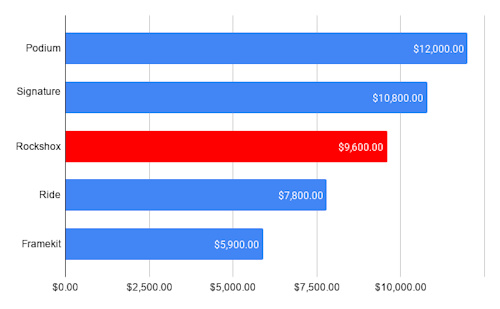
• Pricing: $5,900 - $12,000 USD
• Weight: 25.23 kg / 55.62 lb (Large)
• commencal.com
Joining the masses that have pivoted their e-bike lineups to offer the latest and greatest power plant is Commencal, with their new Meta Power SX. Commencal has always had a race focus in their lineup, and the Meta Power SX, with the updated M2S motor, is marketed as exactly that: their e-enduro race weapon. The bike doesn't differ too drastically from previous Meta Power models. It uses Commencal's classic alloy frame with 160mm of front and rear travel, actuated by their Virtual Contact System (VCS) dual link suspension design.
The new Meta Power SX Avinox sits in Commencal's current lineup between the more spritely Tempo Power SX and the more DH-oriented Meta Power SX 400, both of which sport Bosch's Performance Line SX, the lightweight, half-power motor. The Meta Power SX is the only current VCS linkage design offering the full-power, full-battery package.
To get to the bottom of what this bike is all about, I decided to take it to exactly what it's advertised to do: I brought it to my local e-bike festival, the Mega Volt, which runs in conjunction with BC Bike Fest and serves as a bookend event to the iconic BCBR stage race, where I raced it in my first-ever e-enduro race to see how it stacks up.
MTBSA's Take
| The Meta Power SX is billed as the bike for going fast, impossible climbs, and fun. In practice, all three of those claims held up. The bike feels impressively lively and engaging, and the high-power Avinox M2S delivers smooth, manageable power that gets you up just about anything. The VCS suspension layout is remarkably good at absorbing small bumps while still giving riders a firm platform to push against.The Meta Power SX does come with some nuances: it rewards a more active, dynamic riding style to get the most out of the platform, and it's less of a mistake-erasing, long-travel sled than some alternatives.— MTBSA contributor
Frame Details
As with all Commencal bikes, alloy frames are the only flavour on the menu. The new Meta shares the same VCS suspension layout we've become accustomed to with Commencal, and is honestly almost indistinguishable from their other e-bikes in this layout in recent years.
Similar to the other bikes sporting the VCS dual-link design, the bike has no flip chips or geometry adjustments; what you see is what you get. In this case, it's a mixed-wheel-only affair.
With that said, you get a fair bit of well-thought-out detail with the new Meta Power SX Avinox, including a RideWrap Lotus Pro protective wrap in key areas installed from the factory, generous rubber chainstay protection, Crankbrothers Stamp 1 composite pedals, and a Fidlock water bottle base, although that last one was slightly disappointing once I looked up the cost of Fidlock bottles. Speaking of bottles, there's no mention of a maximum water bottle size on their website, but I barely fit a 591ml bottle in my size large, so something to keep in mind for thirsty folks.
The cables are neatly managed with guided internal routing that stayed noise-free throughout my testing, and as we all know, a quiet bike is a good-feeling bike.
The battery is tucked neatly into the downtube and requires dropping the motor to remove it. The frame is covered under Commencal's lifetime warranty and is EFBE 5 certified, the highest standard in terms of reliability and resistance for a mountain bike.
Motor System
If you haven't heard all about the polarizing M2S motor yet, you're in luck; I'll spell it all out for you.
Back in April, just before Sea Otter, Avinox shook up the industry once more by releasing their lineup-topping M2S motor system, which cranks out an impressive 150Nm of torque and 1,300W of peak power using the older-style 600 and 800Wh batteries. That peak power figure jumps to 1,500W with their new 700Wh battery which uses higher-energy-density cells.
When chatting with Commencal about switching over from Bosch, they said the decision was simple after long-term testing of an Amflow on their home trails around Andorra:
| We tried the Avinox motor, and we were like, there is something interesting here... We were blown away, to be honest. We tested [Amflow] for several months, quite a lot, here in Andorra. High-pressure washer every day, lots of ups and downs. It was a big test.
On the Meta Power SX, the size small ships with the 600Wh battery, and all other sizes get the full-power 800Wh.
As with all high-powered e-bikes right now, there's serious ongoing debate about how much power is too much, both philosophically and legally. I'm not going to get too deep into that here, but it is worth noting that depending on where you live, this bike may not be technically legal or permitted on certain trails.
I did ask Commencal about this debate, and their response was pretty measured:
| There's a speed limitation, in Europe, 25 km/h, in the US 20 miles (32.2 km) per hour, and this is one of the biggest things that keeps e-bikes from getting too crazy. It's not like you have [high] Newton-metres of torque and no speed limitation. That's different, you know.I wouldn't go much higher. I don't think it makes sense to develop a motor that has 200Nm of torque and 2,000 watts. But where we are, it's quite nice.As a brand, we need to educate riders to have the right behaviour. Whether you have an e-bike or not, people are going to do illegal trails, build jumps where they're not supposed to be. There are many ways you can get trail restrictions and problems. It's each one's responsibility.
One nice added bonus from the Avinox system: when my Trailforks tracking had an issue on one of my rides, possibly user error, and my ride log was toast, the Avinox app had everything recorded right in the bike. All your ride stats, all the details, pulled straight from the app. There's also a bike lock feature that shuts down the motor and triggers a wildly loud, obnoxious siren if anyone moves the bike.
As with all Avinox systems, it ships with their powerful 10A rapid charger, which can deliver a full charge in around an hour and a half.
Suspension Design
The Virtual Contact System (VCS) linkage is Commencal's take on a virtual pivot, dual-link design, optimised for grip, control, and responsiveness while maintaining an efficient pedalling platform. It's a tidy package that, during my testing, gave me no issues whatsoever.
The upper pivots use a cassette tool to tighten, which is fine in the workshop but could be a burden if they came loose mid-ride. In my testing, this was never an issue; all pivots and hardware remained solid and smooth throughout.
Another characteristic of the VCS as applied to the Meta is the lack of adjustment options. In my case, the bike's leverage ratio and damping worked well for my tastes, but riders who like to tinker and fine-tune their ride may want to look at more adjustable platforms. Personally, I'm a fan of a bike that works out of the box without fuss, and the Meta delivers on that front.
The thru-axles feature expanders for a secure and precise fit, and dust covers on the rear triangle protect the bearings for long-term reliability. These are small details, but appreciated on a bike you're going to put through its paces.
Geometry & Sizing
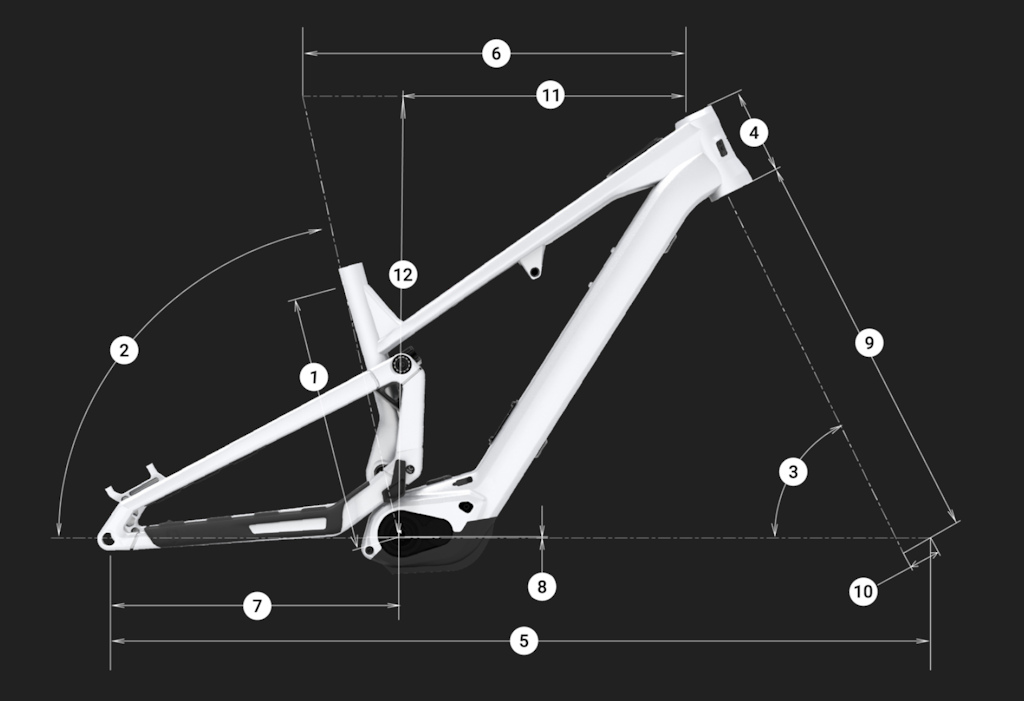
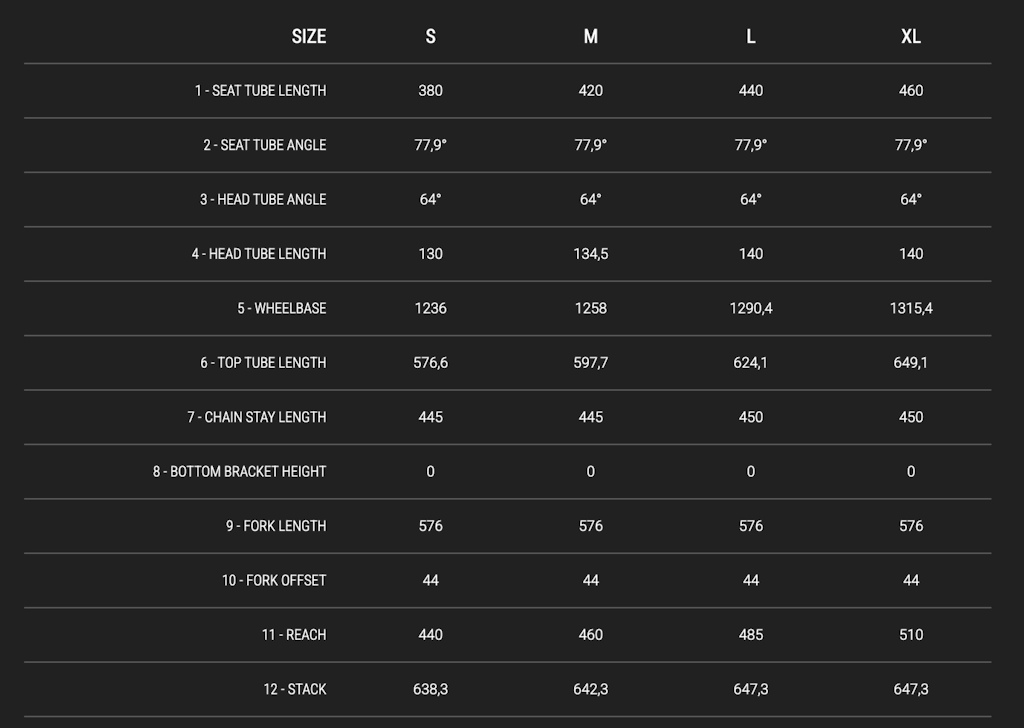
There's nothing too wild here for an e-enduro bike. The head angle sits at a comfortable 64-degrees, and the seat tube angle is a fairly upright 77.9 degrees, which puts riders in a comfortable, balanced seated position.
Reach numbers start at 440mm for a size small and grow to 510mm on the XL. On my tested large, it sits at 485mm. That reach is balanced with relatively high stack numbers, a change Commencal has made since previous VCS e-bike designs. Stack starts at 638.3mm for the size small and tops out at 647.3mm on the XL.
Rear centre is somewhat proportional to frame size, with the small and medium frames at 445mm and the large and XL at 450mm.
Interestingly, the Meta runs 0mm of BB drop measured from the rear axle, a deliberate call from Commencal to keep the bike easier to maneuver side-to-side, reducing the pendulum effect of a heavy e-bike with a super-low bottom bracket. The idea is to keep the bike balanced and confidence-inspiring while maintaining the ability to move it around when you want to attack corners. It's a design choice that's worth keeping in mind once you're out on trail.
Specifications
Release Date | 2026 |
Price | $10800 |
Travel | 160mm |
Rear Shock | FOX Float X Factory |
Fork | FOX 36 Factory 160 mm |
Headset | ACROS ZS56 / ZS66 |
Cassette | SRAM X0 EAGLE T-TYPE |
Crankarms | E13 HELIX RACE, 155 mm crank arms, Bosch |
Chainguide | RIDE ALPHA |
Pedals | CRANKBROTHERS Stamp 1 |
Rear Derailleur | SRAM GX EAGLE T-TYPE |
Chain | SRAM GX EAGLE T-TYPE |
Front Derailleur | n/a |
Shifter Pods | SRAM AXS POD |
Handlebar | RIDE ALPHA R20 760 on S - RIDE ALPHA R27 780 on M / L - RIDE ALPHA R27 800 on XL |
Stem | RIDE ALPHA 40 40 mm extension, 31.8 mm |
Grips | ODI LONGNECK V2.1 |
Brakes | SHIMANO XT, 4 pistons |
Hubs | DT SWISS 350 Hybrid |
Spokes | DT SWISS Hybrid 1 |
Rim | DT SWISS HX1700 |
Tyres | Rear: MAXXIS MINION DHRII 27.5'' - Front: MAXXIS MINION DHRII 29' |
Seat | WTB SOLANO |
Seatpost | ONE UP V3 34.9 mm, 150 mm on S, 180 mm on M and 210 mm on L/XL |
Test Bike Setup
I picked up the Meta Power SX Avinox shortly after Sea Otter and have been riding it ever since. According to the Avinox app, I've put on 660km and 22,300m of climbing in that time. My goal was to get comfortable on the bike before entering the Mega Volt e-enduro race, get a sense for the real-world use case for this thing, push myself a little, and, honestly, figure out what an e-enduro race was all about anyway.
Commencal did a thorough job shipping the bike with their recommended settings, which align closely with their comprehensive setup guide online. For the most part, those numbers were right in line with what I was after.
I bumped the shock pressure slightly from the recommended 210 psi to 225 psi to hit around 30% sag. I also played with pressure either way just to see, but found the recommended baseline was pretty much dialled in, barring a bit of personal preference tweaking.
MTBSA contributor
Location: Cumberland, BC, Canada
Age: 32
Height: 6'3" / 191 cm
Inseam: 34" / 86.4 cm
Weight: 230 lb (104 kg) / 104 kg
Industry affiliations/sponsors: I once knew a guy.
Instagram: @stephanepelletierr
My first few rides on the Meta had me second-guessing my size choice. At 6'3", I sit right on the cusp between large and XL on the sizing chart, and as regular readers know by now, I tend to size down to prioritise maneuverability over all-out stability. I was confused because, aside from a 10mm shorter reach and a slightly steeper seat angle, the geometry is almost identical to the Norco Sight VLT, a bike I praised for having geometry in the sweet spot for me. Something about the steeper seat tube or that 10mm reach difference was making the bike feel shorter than expected those first few rides, and I was second-guessing whether I should have gone XL.
I ended up swapping the stock 27mm rise Ride Alpha bars for 50mm rise Deity Highland bars, rolled ever so slightly forward to avoid losing too much reach. That change made all the difference; the higher stack opened up my riding position, fixed my cramped feeling, and had me feeling right at home. Beyond the bar swap and the minor suspension tweak, setup was painless.
Climbing
Big motor, climbs fast. What more do you want from me?
But in all honesty, there's a bit more to climbing on an e-bike, even one with a bonus 1,300W on tap, roughly the equivalent of three Lance Armstrongs pedalling for you.
The first and biggest factor is how the power is delivered. In the Avinox's case, despite having an absurd amount of power available, the delivery is smooth, intuitive, and easy to manage. Even while supercharging your legs, it's still very easy to feather in the power and truck through the steepest, nastiest climbs without spinning out or losing traction control.
There's also a ton of adjustability in how that power gets delivered. Each mode can be fine-tuned for maximum power and torque figures, the level of motor overrun, and how aggressively the power comes on.
In my case, I ended up significantly dialling back my Auto mode, which ships from the factory with torque and watts maxed out. I set it to a much more manageable 60Nm of torque and 650W of peak power, still plenty fast for most scenarios, but much easier on the battery.
In full Turbo mode, say, blasting up a fireroad, the power is sort of ludicrous. It's pretty shocking what you can ride up at nearly 30 km/h. I'll leave it to you whether we should or shouldn't be doing that, but the capability is there, to the point where a loose gravel road will have the rear tyre rooster-tailing up hills.
Geometry plays a big role here, too. That steep 77.9-degree seat angle works wonders for a comfortable, balanced seated pedalling position, distributing weight nicely between both tyres for grip on steep terrain. Some riders find that ultra-steep seat angles put added pressure on their palms during sustained climbs, but I never had that issue on the Meta.
It's worth noting that I broke two chain links over my testing period. The first time was in the first handful of rides, so I simply replaced the broken link with a quick link. The second time came after about 600km of riding, so I replaced the whole chain after discovering another damaged link. In general, I noticed a decrease in shift performance after around 500km, and the drive train is showing signs of considerable wear. It's not surprising, given the massive amount of power being put through the system, but it's worth mentioning: on these high-powered machines, you will eat through drivetrains at an alarming rate.
Range
On the topic of range, a relatively new consideration for bike reviews, how much climbing can you realistically get from the big batteries with the power-hungry M2S? The honest answer: it depends. As a bigger rider, I notice I drain the battery faster than my lighter-riding buddies. On the enduro race day, I climbed around 1,400m in total (including a bonus post-race lap with Trevor May, Trailforks' founder, and used 93% of the battery across a mix of Auto, Trail, and Turbo modes at a fairly fast race pace. All in all, I'd feel comfortable getting between 1,500 and 2000m on one charge, which, for a high-power motor and a rider of my size, is pretty darn good.
Descending
Descending is why we're all here. If it didn't descend well, the whole thing would be a bit of a waste. Happy to report, the Meta Power SX is not a waste in that regard.
The first thing that stood out was how active, yet supported, the VCS linkage feels on the trail. The suspension is supple over small bumps, tracking the ground well, but offers solid support through the mid-stroke and bottom-out, alive in a way that genuinely inspires confidence. With Commencal's comprehensive setup guide, I had sag and suspension feel dialled right from the first ride without much fussing around. This is one of the best-feeling suspension setups I've experienced on an e-bike - it's responsive, composed, and impressively consistent.
With a 64-degree head angle and 450mm chainstays, the bike felt right at home on a wide array of trails, with only the roughest descents revealing the edge of the bike's comfortable working range. That 450mm chainstay length actually struck a surprisingly good balance in terms of front-to-rear weight distribution, particularly noticeable in longer, flatter corners where the bike hooks up and grips nicely.
At 55 lbs (24.9 kg), the Meta is not the lightest bike in this category, unsurprisingly, given Commencal's burly alloy construction. That said, the weight felt manageable for a rider my size, and as with most e-bikes, the mass is concentrated low in the frame, which keeps handling snappy and responsive.
Spec-wise, the bike arrives equipped with everything a serious rider needs for the rowdiest e-enduro tracks. The suspension felt dialled throughout. Even after the fork started weeping oil from the damping leg seals on a few rides, it still functioned well. The Shimano XT brakes, paired with Galfer Shark rotors, a reader favourite from our recent big brake test, were consistent and powerful, though I'm not sure they quite match the raw power of the Mavens. That said, I was impressed by the bite and consistency of this updated XT-Galfer combination. From the wheels and hubs to the cockpit, everything feels well-considered for a bike with this intention. Buyers should feel confident riding one off the floor without needing immediate modifications.
After the 50mm bar swap and more time on the bike, I adjusted and came to really enjoy the riding position, balanced between the wheels, with a lively, maneuverable feel that suits my style well. For readers who are between sizes and prefer a roomier cockpit, sizing up is worth considering.
The Meta doesn't have the slackest head angle or the most travel in the e-enduro category, which means a slightly more active, dynamic riding style gets the most out of the platform. This isn't a bike that erases mistakes and plows through everything, but it rewards riders who push harder and engage with the terrain.
What's the Best Value?
With four complete builds and one frame kit on the menu, there's likely something for most e-bike curious in the Meta Power SX lineup, but it also means there's real debate about which build offers the best value. To some extent, it comes down to personal preference.
For me, it comes down to the Signature and RockShox builds, which share a lot of similarities but have a few key differences and a $1,200 delta. Both feature top-of-the-line front suspension from the big players, Fox on the Signature, RockShox on the other, although the RockShox build gets the beefier Zeb with travel bumped to 170mm. Rear suspension goes Fox Factory on the Signature versus the RockShox Super Deluxe Select, which is an entry-level shock by comparison.
Component-wise, the Signature gets Shimano XT brakes with Galfer Shark rotors, while the RockShox build comes with Maven Base brakes. Personal preference aside, I'd lean toward the Mavens for all-out power, even if I came away impressed with the updated XTs. The Signature also gets a wireless GX T-Type drivetrain hardwired to the bike's battery, versus the cable-actuated Eagle 90 on the RockShox build. The Signature additionally receives DT Swiss 350 hubs, an upgrade from the 370s on the RockShox spec.
Beyond that, dropper post, cockpit, and accessories are shared between the two. The RockShox build also carries a notable weight penalty; Commencal lists the Signature at 53 lbs (ours weighed in at 55.3 lbs (25.1 kg)) and the RockShox build at a claimed 57.3 lbs (26 kg).
Both are undoubtedly capable machines out of the box, but personally, I don't see the $1,200 worth of upgrades in the Signature over the RockShox build. The Zeb is actually an enticing option, a touch more stiffness up front and a bit more travel. The cable-actuated drivetrain is perfectly fine in my eyes, and beyond that, I'd genuinely prefer the Maven brakes on the RockShox build.
How Does It Compare?
As with all Avinox bikes right now, it's been hard to avoid Amflow coming up in conversation as a value comparison. Being the in-house bike brand of the motor company has its perks, and Amflow has come out swinging with its market entry. Take the recently released Amflow PX Pro, their top-of-the-line, latest offering, coming in at $10,200 USD.
What does that price tag get you? On paper, quite a lot, actually. Full factory suspension front and rear on a 150/160mm carbon chassis, in a claimed 20kg package. It also comes with Avinox's updated, more energy-dense 700Wh battery, which unlocks an extra 20Nm of torque from the same M2S motor, bringing it to 150Nm with the same 1,500W peak power. Flip chips allow adjustment of head angle, BB height, and chainstay length. Spec-wise, it's even more impressive: factory Fox suspension, an XO T-Type drivetrain, and carbon wheels out of the box. It does feature Matura Gustav brakes, a pro for some, a downgrade for others.
Geometry-wise, you get a fairly comparable package: 64-degree head angle, an ever-so-slightly steeper 78-degree seat tube, 451mm rear centre, and a lower stack of 645.9mm on the comparable XL Amflow. On spec and feature list alone, the AMflow offers better value on paper.
That said, there's more to a bike than the spec sheet, and different suspension layouts make a real difference in on-trail performance. The suspension on this Commencal is genuinely impressive, one of the best I've ridden on an e-bike so far in terms of traction and composure while still feeling lively and fun. Having not ridden the latest Amflow, I can only compare it to the previous generation, which featured a similar layout. It was noticeably less dialled, more awkward and clunky, feeling zippy but not particularly capable or confidence-inspiring.
I don't have a clean answer here. There's undoubtedly better spec value on paper with the Amflow, and honestly, if I were walking into a shop to buy an e-bike, I'd probably be swayed that way on value alone. But the Commencal is likely the better-riding machine, even if the paper heavily weighs in Amflow's direction.
Technical Report
Galfer Shark Rotors / Shimano XT Brakes: These were my first go with the newly updated Shimano XT brakes, which feature an improved bite point and new, lighter fluid claimed to reduce lever force. The Galfer Shark rotors had been a recurring reader recommendation throughout our big brake test. In real-world use, I was genuinely pleasantly surprised by the bite and power, with no issues throughout testing, barring one mildly terrifying first ride before the pads had fully bedded in. After that, smooth sailing.
Fox Factory 36: The new Fox was extremely supple over small bumps and, despite the slimmer 36mm stanchions, felt fairly composed and confident. That said, it was weeping oil from the damping leg seals within a few rides.
Handlebars: The stock Ride Alpha 27mm rise bars feature a nice shape and a narrower 31.8mm bar clamp diameter, a welcome detail. But they were a bit low for my liking, given my between-sizes situation. I swapped to a set of Deity Highland 50mm riser bars, my current bar of choice, and immediately felt more comfortable and balanced on the bike.
DT HX1700 Wheels: Alloy wheels cut costs and offer a different kind of durability; they dent rather than crack, which is relevant in a multi-day race where a cracked wheel can end your day. In the field, these held up well, though I did have to true and tension the wheels a few times throughout testing. The DT Swiss 350 hybrid hub uses straight-pull spokes rather than the more common J-bend configuration. Those straight-pull spokes made tensioning a bit more cumbersome; if the nipple backs off past a certain point, the whole spoke spins freely when you try to tension it. Minor annoyance, but worth noting. Beyond the extra maintenance, they held up well to a fair bit of abuse.
Pros
+ Comfortable, well-considered geometry
+ Impressive, capable suspension platform
+ Shred-ready spec out of the box
Cons
- Heavier than competing options
- High motor output accelerates drivetrain wear noticeably
- A power-hungry motor will zap the battery if in high assistance modes
Regions in Article
Mount Tzouhalem
MTBSA contributor
Cumberland, BC, Canada
Member since Sep 30, 2008
502 articles
Based in Cumberland, BC, MTBSA contributor is the Content Manager at MTBSA, overseeing events, tech, media, and gear reviews. He got his start in bike shops at age 14 and competed in slopestyle before working in industry brand marketing roles. With 18 years of experience and an unrelated Geology degree from the University of Calgary, he pairs deep tech knowledge with a passion for the sport. Off the clock, he’s usually riding, surfing, snowboarding, or on his moto.
Images supplied with this review
Images: MTBSA contributor. Charts retain the currencies and measurements shown in the original.
For South African readers
Overseas prices in this report are not confirmed South African retail prices. Check local availability, warranty support and the complete rand price with your retailer. No MTBSA test score has been assigned.
What's your take?
Share your experience. All comments are reviewed before appearing.
Sign in to join the conversation