
By MTBSA contributor
Sour is a small brand with a growing presence in the mountain bike world, thanks to their diverse lineup and practical approach to each model they make. Whether it's XC or gravity, the Sour bikes have a nice balance of form and function, with the Double Choc representing their take on the quintessential all-mountain rig.
With 148mm of rear travel and a 160mm fork, the Double Choc aims to tackle gnarly descents without taking too much away from the mellower end of the spectrum. As to whether it succeeded in that goal, read on. First, some details about what makes this bike unique.
Double Choc Details
• Travel: 148mm / 160mm fork
• 29" wheels
• Steel and aluminium frame
• 64.5° head angle, 77° seat angle
• 470-526mm reach, 634-656mm stack
• 438-444mm chainstay length
• Price: €3499 (frame only)
• Frame weight: 3.8 kg (w/ hardware, no shock)
• sour.bike
The Double Choc is currently available as a frame only, with the option to add some components to the basket when ordering. Shocks, forks, headsets, and dropper posts are available from Sour, with a few options in each category. Like many smaller boutique offerings, the rest is up to you, so I did my best to put the Double Choc together with a build that felt like the norm for a bike of this sort. Mostly standard parts I'm used to, with a few choice items thrown in for flair.
MTBSA's Take
| The Sour is a bit hard to characterize here, as it does a pretty solid job everywhere - it's fun on flow trails, capable enough on challenging tech, and has an intuitive ride quality to it. I've ridden tons of bikes in this travel category, and would split them between those that punch above their travel numbers, and those that happily occupy that middle ground where a bit of everything is the ultimate goal. The Double Choc belongs to that second group, with plenty of comfort to tone down gnarly trails, but not quite as composed a feel as others.— MTBSA contributor
Frame Details
The Sour's simple steel silhouette hides a few nice details that make it easy to live with, and simple to work on. 3D-printed bolted cable routing makes any brake or drivetrain work a breeze, and allows for simple replacement should something break. The files are available directly from Sour, should you want to print your own.
The steel front triangle is welded in Germany by the Sour team, but there's a quiet collaboration at play on the back end of the bike. The heavily-machined seatstay is manufactured by ActoFive, the German manufacturer known for their own fully CNC milled frames. This manufacturing method allowed Sour to keep the key tolerances tight on the rear linkage, and gives the bike a distinct look. You'll note that the build shown here has some ActoFive cranks as well, which tie together with the rest of the frame elements beautifully.
As a package, the Double Choc is a pleasantly simple thing. There is a flip chip at the lower shock mount, altering bottom bracket height, head angle, and seat angle - as always, it's worth experimenting with both options before settling on one. The frame's hardware is robust and easy to access, with multitool-friendly interfaces.
The one unusual element on the frame is the seatpost collar, which had a hard time keeping the 31.6mm post in place. I swapped the stock collar out for a Paul Components quick release collar, which alleviated any slippage.
For those curious, the frame weighs 3.8 kilos, sans shock but including all the hardware.
Geometry
There are three sizes of Double Choc available, with the geometry decidedly skewed towards the tallest end of the spectrum. Like some other brands are want to do, the t-shirt sizing is essentially shifted a full size over, with the Medium's fit figures aligning more closely with a typical Large. I rode a size Large, which fits much like the standard XL.
In the name of manufacturing efficiency, different frame sizes do share some common figures, with the 110mm headtube bridging M and L, and the 444mm chainstay length present on both L and XL. This isn't unheard of for smaller manufacturers looking to streamline the build process, though it may yield some compromise here or there.
The geometry is adjustable, via a flip chip at the lower shock mount, with the Low position yielding a 0.3° slacker headtube angle, 0.47° slacker seattube angle, and 5mm lower bottom bracket. After some back and forth experimentation, I landed on the Low mode being the better fit for my use case.
An interesting an somewhat frustrating asterisk to the geometry section: after a few initial rides, it seemed to me that the bike I was riding had a much steeper seat angle than advertised. Some measurements confirmed my suspicions, as the bike I was sent had a 79° seat angle, not the standard 77°. The folks at Sour confirmed that this was a one-off frame meant to experiment with some geometry concepts, and apologized for the confusion. I happened to like the steeper feel quite a bit, but it does alter my experience a bit when compared to the stock offering.
Suspension Design
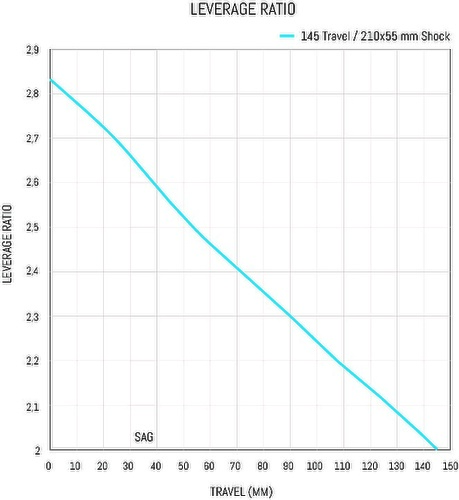
The Double Choc's Horst link layout delivers 145mm of rear wheel travel when using a 210x55mm shock, and can be reduced to 136mm travel with a 50mm stroke shock. I exclusively ran the bike in the longer-travel mode, as it seems to be the bike's primary purpose.
Anti-squat is fairly high on the Sour, landing around 120% at sag. That contributes to a firm pedaling feel, but might take away some composure on rougher sections of the descent. Anti-rise is rather low, ranging from the high 30s to low 60% range, giving the bike an active feel under braking, but pitching things forward slightly as you get on the brakes.
Test Bike Setup
The Double Choc is currently only sold as a frame, so the build kit will ultimately be up to you. My review bike showed up with a complete build, but over the course of testing I found myself experimenting with a wide array of parts to try to find the bike's happy place. In the end, a standard build prevailed: strong brakes, aluminium wheels, DoubleDown tyres, and either a Manitou Mezzer or Fox 36 fork.
Testing Info
Testing took place mainly in Bellingham, Washington, and the surrounding area in the wide range of trail and weather conditions that accompany the winter and spring in the Pacifc Northwest.
MTBSA contributor
Location: Bellingham, WA, USA
Height: 6'3" / 191cm
Inseam: 34" / 86cm
Weight: 185 lbs (83.9 kg) / 84 kg
Industry affiliations / sponsors: None
Instagram: @danger_dario
Climbing
The Double Choc climbs quite well, with a firm feeling under power and enough grip to scrape up some truly silly sections of singletrack. That latter element came as a bit of a surprise, but kicks in under harder efforts where you're standing up and stamping on the pedals to clean steeper climbs. In general, the feel is even-keeled and not particularly rushed, though I think you could easily speed things up with some fast-rolling tyres.
As mentioned before, this review bike came with a steeper seat angle than is stock, so my feelings are somewhat altered as a result. I got along with the very steep seat angle quite well, as it suited the steep climbs in my neck of the woods, and my general preference for a more upright pedaling position. The stock position isn't anything to scoff at, landing in a more typical place at 77° - having ridden plenty of bikes with that same figure recently, I think it would be just fine, and possibly preferable for those with more undulating terrain.
The Double Choc isn't a particularly light bike, but it carries its weight well, thanks to that supportive pedaling platform and easy handling. It's not overly slack up front, so picking a line up technical climbs feels easy and intuitive. Over long days in the saddle, I found the Sour to be comfortable and easygoing, just a good solid bike to put in the miles on without much fuss.
Descending
The Sour is a bit hard to characterize here, as it does a pretty solid job everywhere - it's fun on flow trails, capable enough on challenging tech, and has an intuitive ride quality to it. I've ridden tons of bikes in this travel category, and would split them between those that punch above their travel numbers, and those that happily occupy that middle ground where a bit of everything is the ultimate goal. The Double Choc belongs to that second group, with plenty of comfort to tone down gnarly trails, but not quite as composed a feel as others.
For the majority of riding, I think the suspension performance and handling work nicely together to deliver a feel that lets you get away with a fair bit, but reminds you when you start approaching the limit. Other bikes in the 140-160mm realm are more willing to let you run a bit past that line and really push things, but the Sour felt like it started protesting a bit earlier. Part of that may be due to the suspension feel, which has a supportive feel that can get a bit overwhelmed in very rough and chopped up trail. It's more than enough for most riding, mind you, just less composed through the feet when you're really doing something you shouldn't. The frame feel falls into a similar category, with a nice level of flex that takes the edge off chatter, but can feel a bit wiggly when you're stuffing it into corners and compressions.
Those looking to push the Double Choc a little harder might benefit from an O-Chain, e13 Sidekick, or DT Swiss DF hub, mostly to take away some of that anti-squat effect through the rough. You'll still benefit on the climbs, but a bit of drivetrain separation may go a long way for those heels-down repeated compression situations. Frame flex is one of those things that falls more into the personal preference realm, where some folks love the feel of a softer bike, and others find it unnerving. The Sour is far from the wiggliest bike I've ridden recently, but when compared to something very stiff - like a Hightower - it's noticeable.
How Does It Compare?
There are many bikes in the do-everything mid travel category, making comparisons both easy and overwhelming. I've spent a ton of time on similarly-positioned frames like the Specialized Stumpjumper and Santa Cruz Hightower, and would characterize those as very good bikes for riding just about anything you might encounter, including some very gnarly terrain at high speeds. Where the Double Choc sits is more in the capable trail bike niche, alongside things like the Trek Fuel EX. Forgiving enough, but not necessarily encouraging you to do anything dumb, these bikes both offer nice handling and a level of comfort that tames harder sections of trail without taking the fun out of easier and less demanding trails.
Outside those characteristics, the Trek and the Sour are obviously quite different, appealing to vastly different customers and offering their own USP. The Sour has that boutique and handmade appeal, where the Trek has a practicality and built-in adaptability that will cater to a wider audience. Both solid options, just depends on who you are.
Technical Report
SRAM GX Eagle Drivetrain: It's been a while since I've had a review bike come in with a SRAM drivetrain that isn't some sort of Transmission. Turns out, the OG 12-speed kit still works well, though I do love shifting under max load like a dummy. The weaker clutch was a good test of Sour's chainslap protection, which did a pretty good job of quieting things down. Though the newer and fancier drivetrains do offer some improved performance, it's always nice to have a reminder that the slightly out of date options are still quite good.
Tyre Choice: I ran all sorts of tyres on this bike, starting with some Schwalbe Albert Trai-casing radials. I don't entirely trust the Albert as a front tyre, as the grip falls more into the "okay until it's completely gone" category. The Trail casings felt too compliant for this bike, so I ended up opting for a High Roller III / DHRII combo, in the Double Down casing. Solid without being too heavy, and possibly the most predictable tyre combo I've used recently.
Pros
+ Adaptable platform, works well everywhere
+ Very easy to live with, nice build details
+ Fun on wide range of trails
Cons
- Capability ceiling feels lower than some other mid-travel bikes
- Caught between trail bike efficiency and enduro composure
- No small sizes in the range
Action photos: Finnegan McDermott
Images supplied with this review
Images: MTBSA contributor. Charts retain the currencies and measurements shown in the original.
For South African readers
Overseas prices in this report are not confirmed South African retail prices. Check local availability, warranty support and the complete rand price with your retailer. No MTBSA test score has been assigned.
What's your take?
Share your experience. All comments are reviewed before appearing.
Sign in to join the conversation